

Confused about what to eat during your eating window? Discover the official Intermittent Fasting Food Pyramid created by a Clinical Nutritionist—plus exact protein targets, liquid rules, and food lists to optimize fat burn.
You likely get the gist of Intermittent Fasting ~ you fast for a bit and then you eat. Sounds pretty simple, right? However, if you ignore the eating window and break your fast with the wrong types of foods, you likely won’t make any progress with your weight loss goals or possibly even gain weight.
So today I’m sharing my official Intermittent Fasting for Weight Loss Food Pyramid to help set you up for fat loss success with the right types of foods that can support your goals.
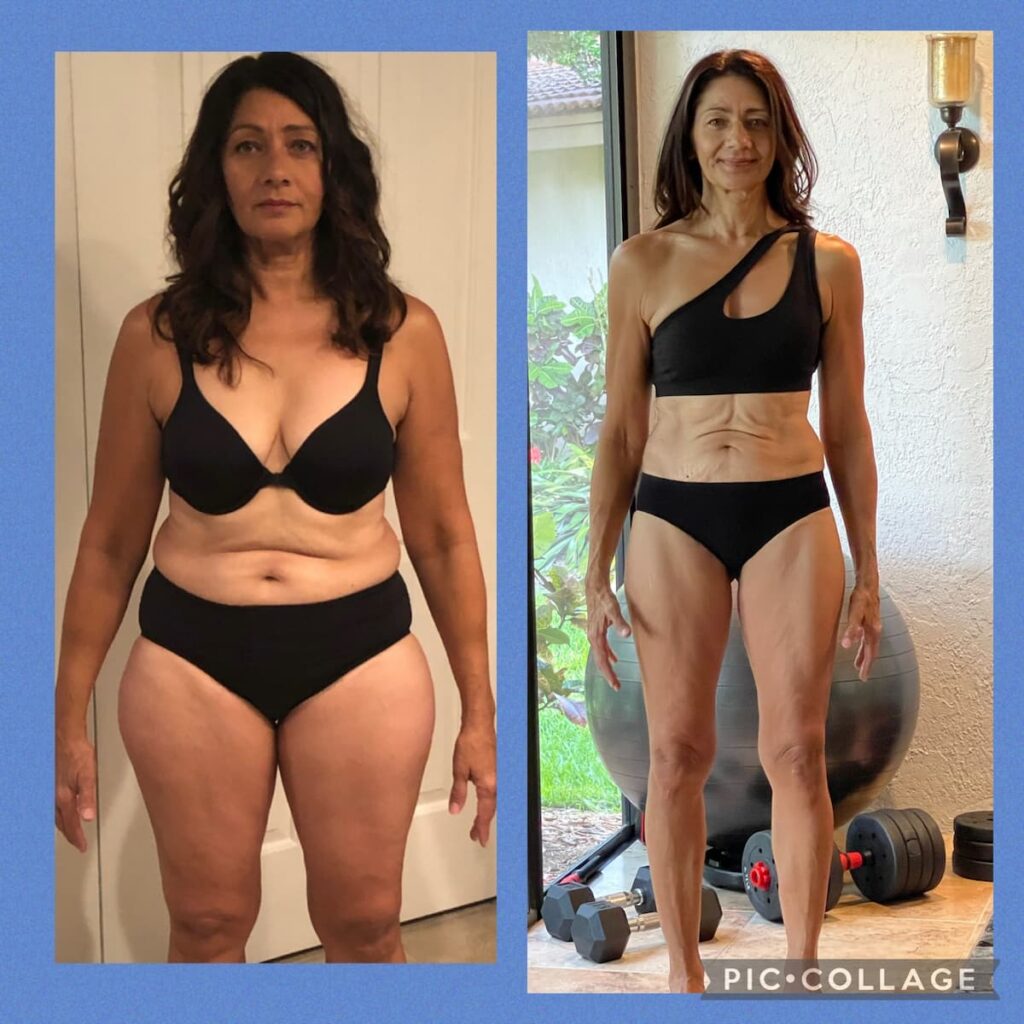
This food pyramid has been adapted from my Complete Intermittent Fasting Bundle that has helped thousands of men and women around the world (like Jeannette, pictured below) with their weight loss goals.
What Is The Intermittent Fasting Food Pyramid?
Rather than randomly choosing what to eat when you break your fast, the Intermittent Fasting Food pyramid is designed to build on the same fat loss benefits of Intermittent Fasting during your eating window. That way you can continue burning fat as fuel and having stable energy levels, even when you’re not fasting.
The Intermittent Fasting Food Pyramid combines specific foods at every meal to help achieve:
- less insulin spikes (meaning more time spent in “fat burning”)
- less hunger (thanks to naturally raised satiety hormones)
- more fat burning and less muscle loss (by prioritizing protein)
Combined, this can make fat loss easier without counting calories. Now let’s dive into the full pyramid, food lists and recipes to kickstart your Intermittent Fasting journey.
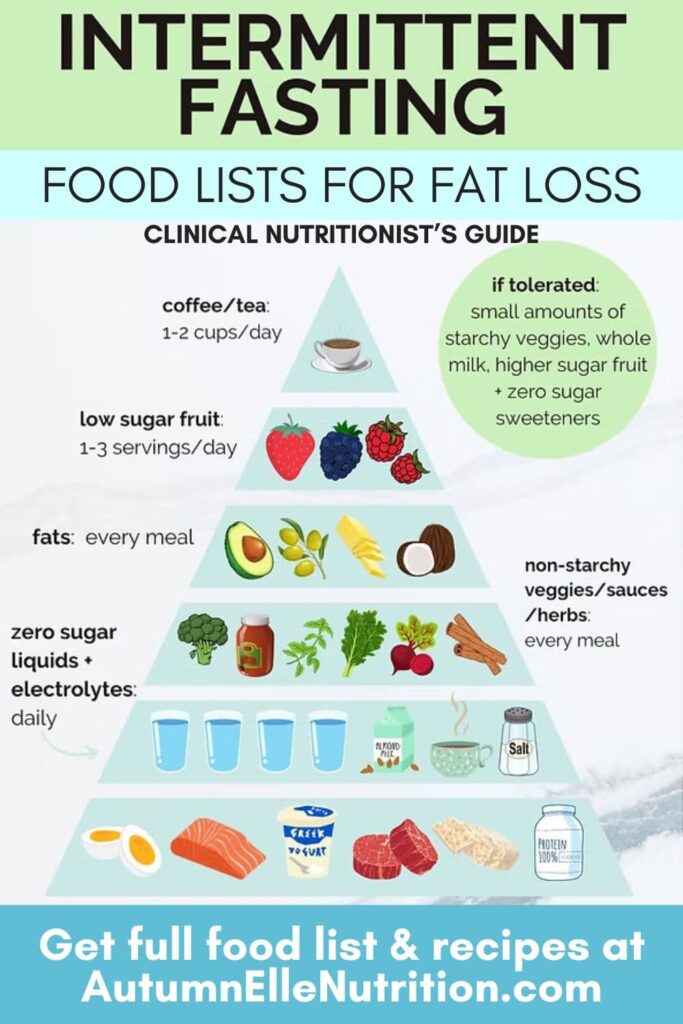
Tier 1: High Quality Protein
A high quality source of protein should be eaten at every single meal during the eating window, hence why it’s at the very bottom of the food pyramid. This supports the body burning fat while maintaining muscle mass. In fact, one study found that a higher protein intake was better at burning fat and maintaining muscle mass than just calorie restriction.(1)
Protein goal: Every meal should hit between 30 to 50 grams of protein from high quality sources.
Examples of 30 to 50 grams from high quality sources of protein include:
- 4 to 6 ounces beef
- 4 to 6 ounces chicken
- 4 to 6 ounces all fish
- 4 to 6 ounces shellfish
- 6 to 10 eggs
- 1 1/2 to 2 1/2 cups greek yogurt
- 1 1/4 to 2 cups skyr
- 5 to 9 ounces tempeh
- 3 to 5 scoops zero sugar whey protein powder
- 4 to 6 lamb
- 4 to 6 pork
Kickstart Your Journey
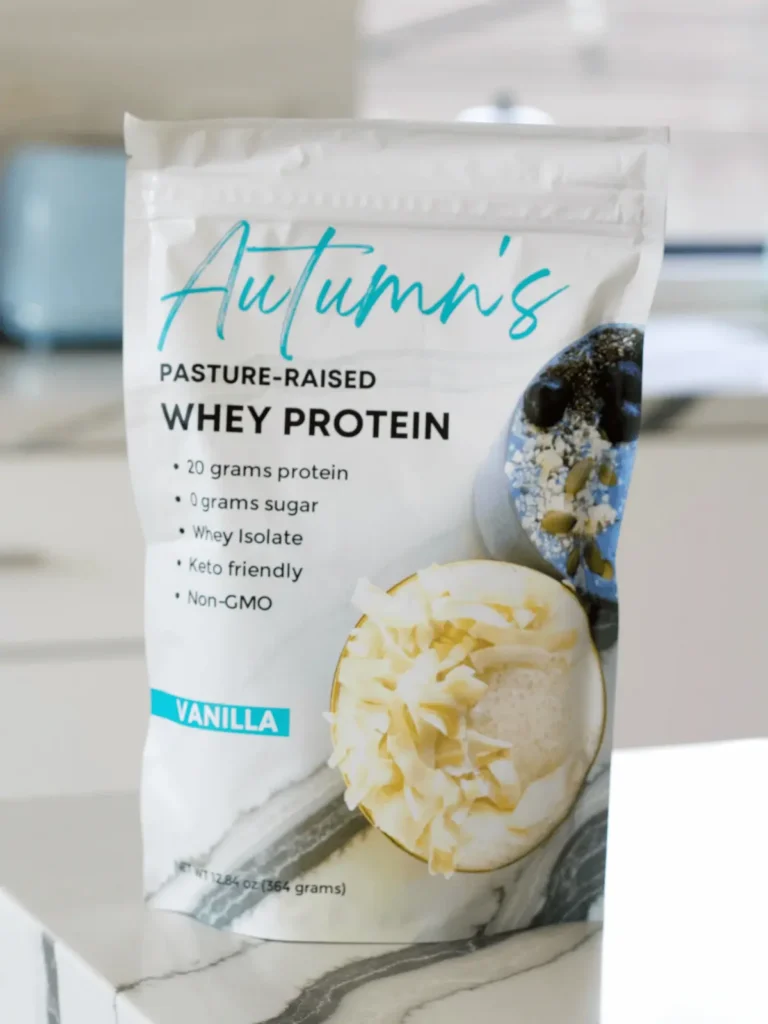
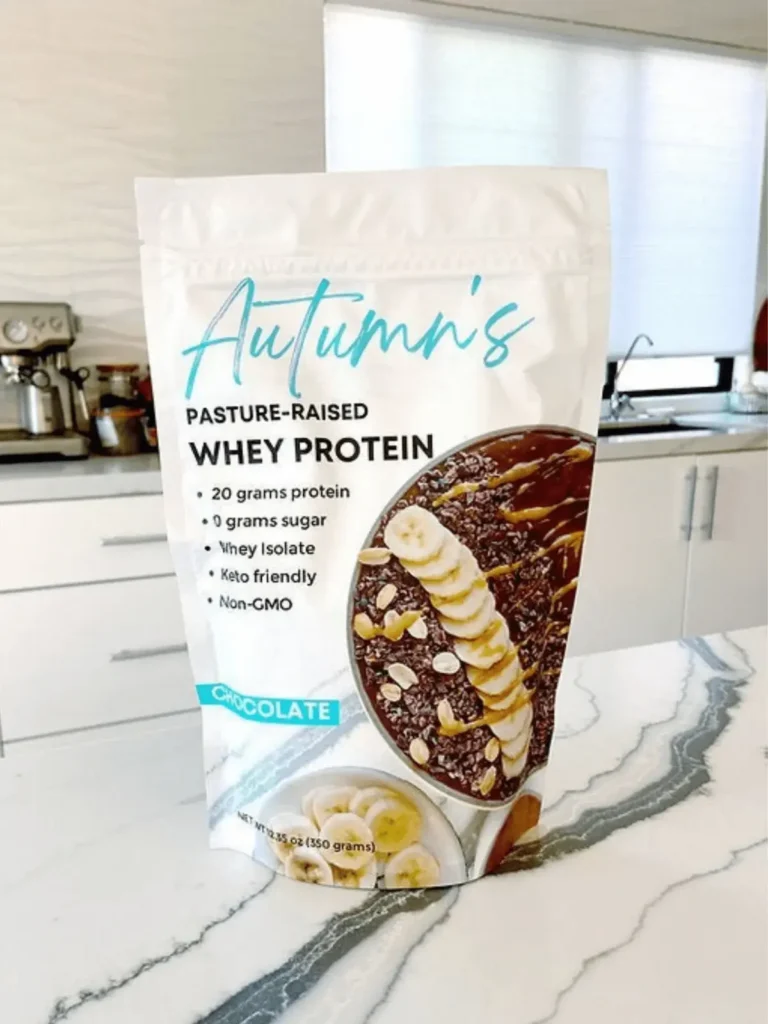
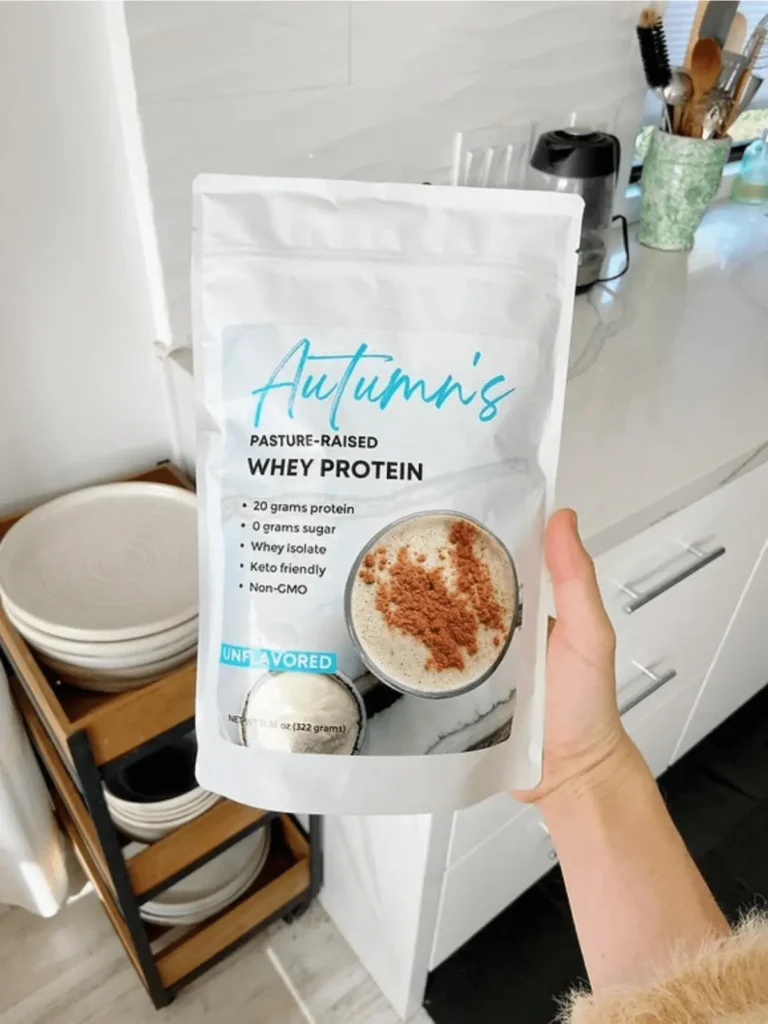
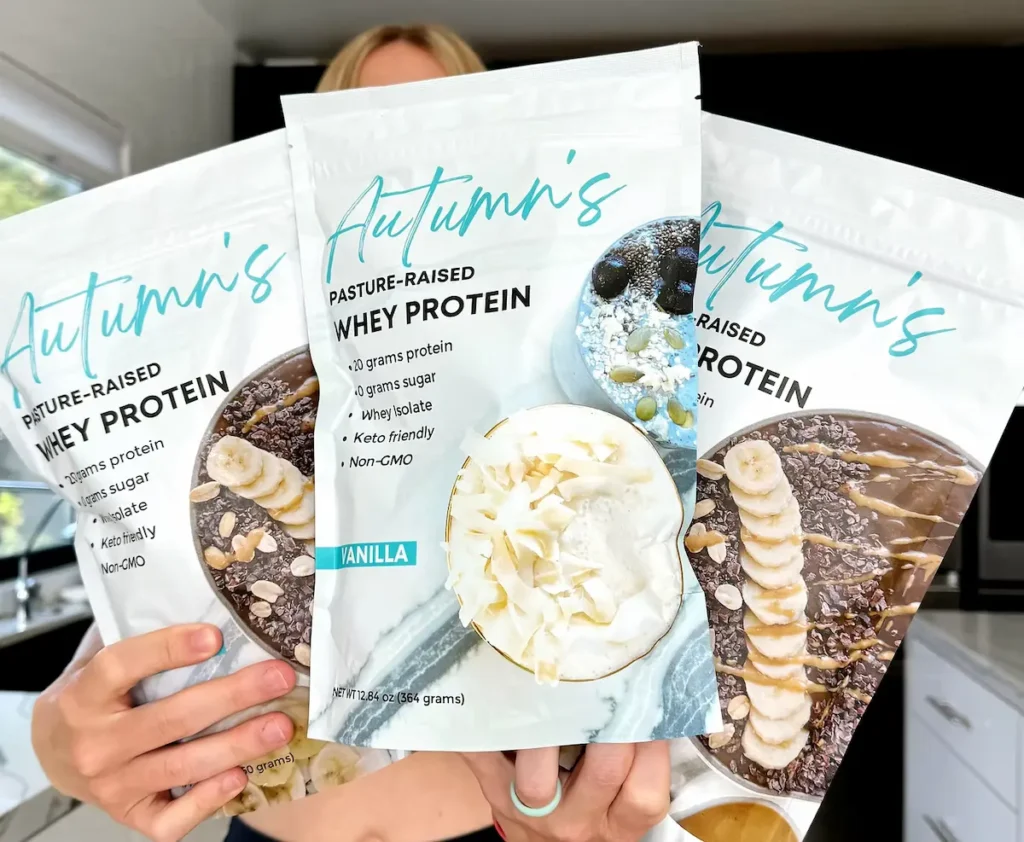
Shop Autumn’s Whey Protein Powder
Our delish bestselling zero added sugar, gluten & heavy metal tested whey protein powder!
Tier 2: Zero Sugar Liquids & Fasting Safe Drinks
As you learn in the Complete Intermittent Fasting Bundle, it’s very easy to lose a lot of water and sodium during the fast. This water and electrolyte loss can lead to headaches, hunger and low energy levels.
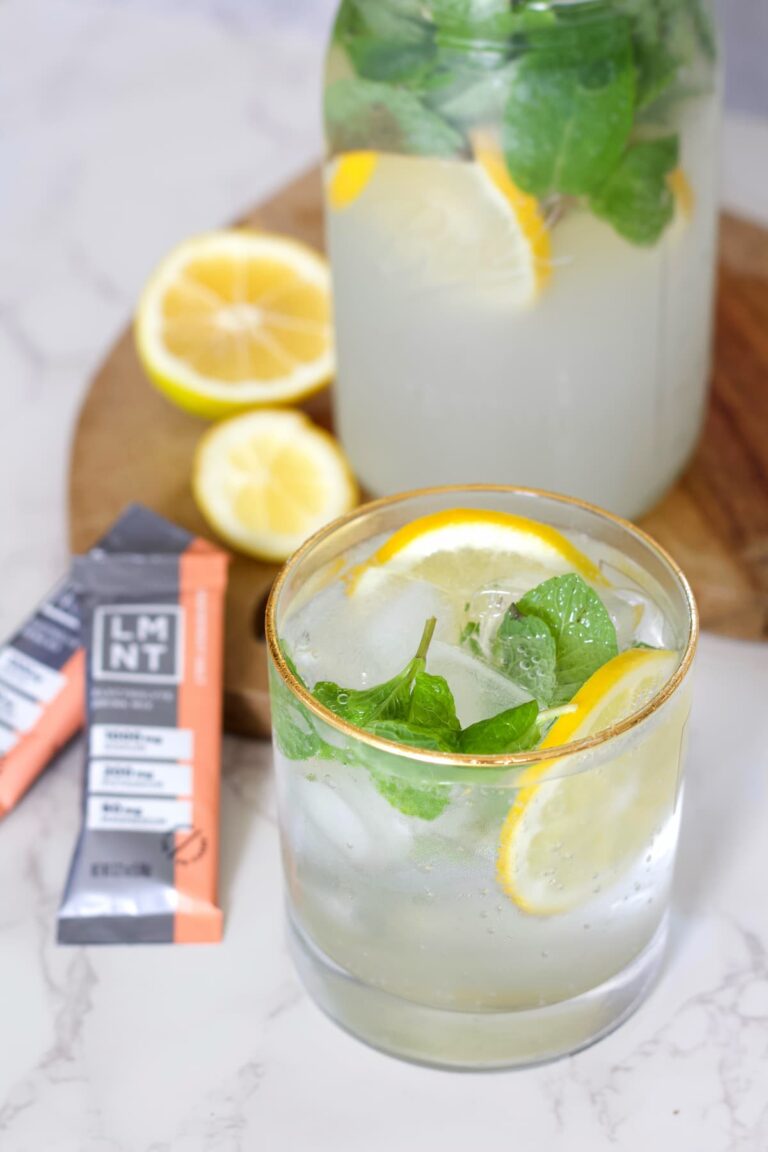
To see the perks of hydration without breaking a fast, it’s important to stick to zero sugar liquids like water, sparkling water, unsweetened almond milk, unsweetened coconut milk and herbal tea. Great sources of electrolytes include a high quality salt, like Redmonds Real Salt or Celtic Sea Salt or a zero sugar electrolyte replacement like LMNT.
Daily hydration rule: Aim to drink half your body weight in ounces every day. For example, if you weigh 150 pounds, you could aim for about 75 ounces of water/liquids per day. If you’re exercising, you need to add about 16 to 20 ounces more per day.
As for electrolytes, the amount needed will vary from person to person. Read the complete guide to electrolytes for intermittent fasting for specific amounts and recommendations.
Tier 3: Non-Starchy Veggies, Herbs, Seasonings + Veggie Based Sauces
These foods don’t spike the storing hormone insulin very much but help to massively raise satiety and prevent hunger. So you can load up your plate without having to limit your intake. Non-starchy veggies includes essentially every vegetable other than potatoes, sweet potatoes and parsnips. So if it grows in the ground and isn’t a potato or parsnip, then load up on it!
Non-starchy veggie goal: Aim for at least 1 cup of non-starchy veggies at every meal, but feel free to have even more than this!
But don’t forget about the herbs, seasonings and veggie based sauces! Without adding flavor to your meals, you will quickly get bored and revert to old habits that don’t support your weight loss goals.
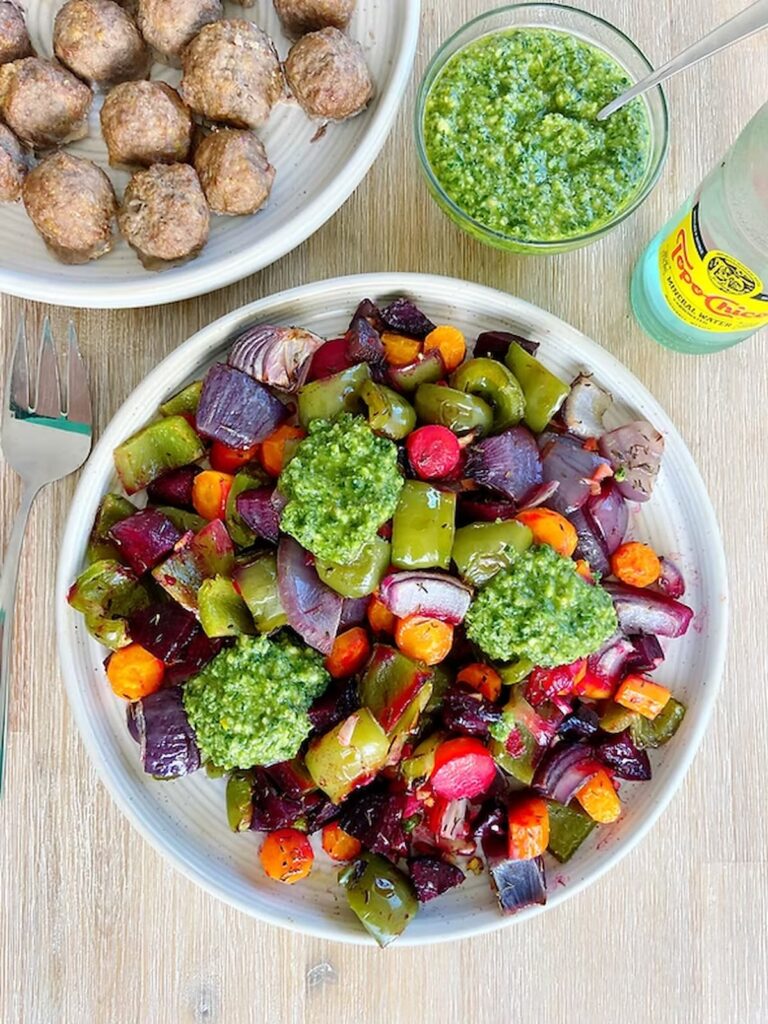
Get cozy with basil, pesto, mint, dill, garlic, turmeric, cinnamon and paprika for a huge boost of flavor. You can also make “veggie” based tomato sauces (yes, tomatoes aren’t veggies, but they can still be used as a great sauce option) for homemade “pasta” and meatballs.
Try my Viral Dirty Cabbage Recipe that loads up on these non-starchy veggies for the perfect dinner during your eating window.
Tier 4: Whole Fats, High Quality Oils + Certain “Flours”
All of these are sources of high quality fats. Fats are uniquely helpful with Intermittent Fasting because they don’t spike the storing hormone insulin, making it even easier to shift back into a state of fat burning.
Fats also help to boost satiety, stabilize blood sugar and prevent sugar cravings by raising the “fullness” hormone called CCK.(2) When paired with protein, high quality fats also help the body to better recover from exercise.(3)
Fats goal: Aim for 1-4 servings of fat at every meal. A “serving” is considered 10 grams of fat (10-40 grams of fat per meal).
Great sources of fat include:
- Fats naturally found in meat and dairy
- Coconut oil, coconut meat
- Nuts, nut butters
- Seeds, seed butters
- Fats naturally found in eggs
- Olive oil
- Grass-fed butter
- Grass-fed ghee
- Olives, olive oil
- Tallow
- Avocado
- Almond flour
- Coconut flour
All of the recipes in the Complete Intermittent Fasting Bundle naturally build healthy fats into the recipes so you don’t have to think about it.
Tier 5: Low Sugar Fruit
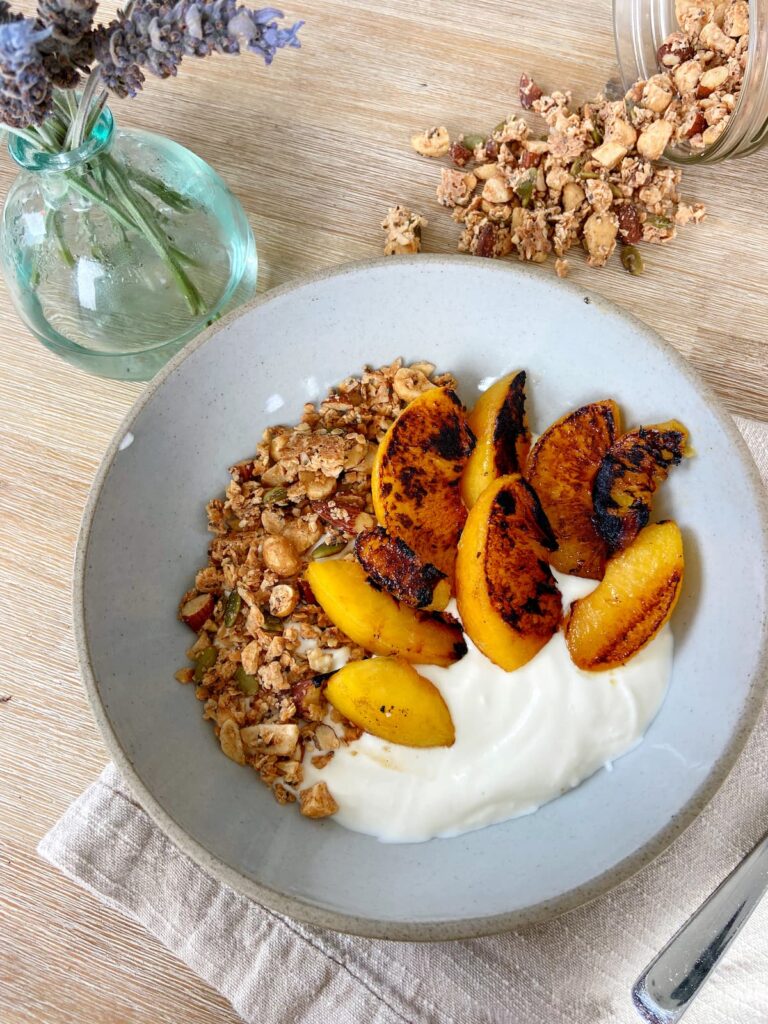
If your primary goal is fat loss, low sugar fruits are not something that should be eaten in large amounts at every meal. Sugar, regardless of its form, can raise the storing hormone insulin. Sticking to at most 1 to 2 servings of low sugar fruit per meal (1 to 3 servings per day) can keep the sugar content low enough for the body to still easily shift back into fat burning and not trigger sugar cravings.
Low sugar fruit includes (but isn’t limited to):
- Raspberries
- Blackberries
- Strawberries
- Blueberries
- Peach
- Apple
- Pear
- Apricot
- Lemon
- Lime
- Watermelon
- Nectarine

Tier 6: Coffee and Tea
Caffeinated coffee and tea can both be useful during the Intermittent Fast to help suppress hunger and boost energy levels. However, I’ve placed this at the very top of the food pyramid because too much caffeine can disrupt our sleep patterns and poor quality sleep is directly tied to weight gain around the belly.(4)
Daily coffee and tea goal: Up to 2 servings of coffee or tea per day.
And you aren’t just stuck with plain black coffee during your fast. There are quite a few things you can stir in without breaking a fast.
Read the 10 things you can add to your coffee that won’t break a fast.
“If Tolerated” Category
This final category does not fall into the actual food pyramid because it’s highly dependent on the individual. Some people can tolerate these various food items and achieve their weight loss goals whereas others can’t. It’s important to explore these options and discover which can be included and which should be limited (or avoided) while you work toward your weight loss goal.
Zero Sugar Sweeteners
These include stevia and monk fruit. I’ve found most folks can tolerate a small amount of these zero sugar sweeteners in their protein powder or smoothies. However, it’s important to not use stevia and monk fruit at every meal, otherwise it might shift the taste buds to crave more sugar throughout the day.
Whole Milk
If you’re lactose intolerant or carb sensitive, then you’ll want to avoid whole milk. If not, about 1 cup per day is a great option to get a boost of protein and calcium. Not sure if you’re carb sensitive? Take my free Carb Sensitivity Quiz.
Starchy Foods
Healthier starchy foods like lentils, beans, chickpeas, corn and sweet potatoes can be a great addition in small amounts if you aren’t carb sensitive. Even if you’re a bit carb sensitive, most people can typically include a small serving at one meal a day and still make progress with their goals. However, if you’re very carb sensitive or you find that you’re not achieving your weight loss goals with these foods in your diet, then it might be time to experiment with removing them while you work toward your weight loss goals.
On the flip side, if you’re active or strength training, you may need a larger serving of these starchy foods to help support muscle recovery. You can learn more about how to use starchy foods depending on your goals with the Complete Intermittent Fasting Bundle.
High Sugar Fruits
These include fruits like bananas, mango and papaya. These are relatively high in sugar and very low in fiber. Same rule applies here as does with the starchy foods — if carb sensitive, try sticking to the low sugar fruits for now. If not, then you likely can test out 1 serving of these higher sugar fruits per day.
Tap into fat burning
The 21 Day Intermittent Fasting Program
The 21 Day Intermittent Fasting Program provides step-by-step strategies to help you use Intermittent Fasting with delicious, protein-packed meals to support fat loss, reduce hunger, and boost gut health.
FAQ’s
Neither! Intermittent Fasting isn’t about eating less, rather less often. You should still eat three meals, just during a smaller eating window. This provides the protein, fat and fiber for reduced hunger and muscle protection while prioritizing fat burning. Try my free Intermittent Fasting Schedule Quiz to determine how long you should fast.
Yes, you can but you need to be careful with the type you choose. It must have enough protein, fat and fiber to raise satiety hormones and prevent hunger. Read the full guide to breaking a fast with a protein shake.
It depends on your goal. If it’s primarily fat loss, then sticking to one teaspoon or less of chia seeds should not break a fast. Read the full guide to chia seeds during a fast.
Recipes To Break Your Fast With
Here are break-fast, lunch and dinner recipes that follow the Intermittent Fasting Food Pyramid structure to help get you started.
Break-fast
- Fluffy Blueberry Protein Pancakes
- High Protein High Fiber Cottage Cheese Bowl
- Citrus Green Protein Smoothie
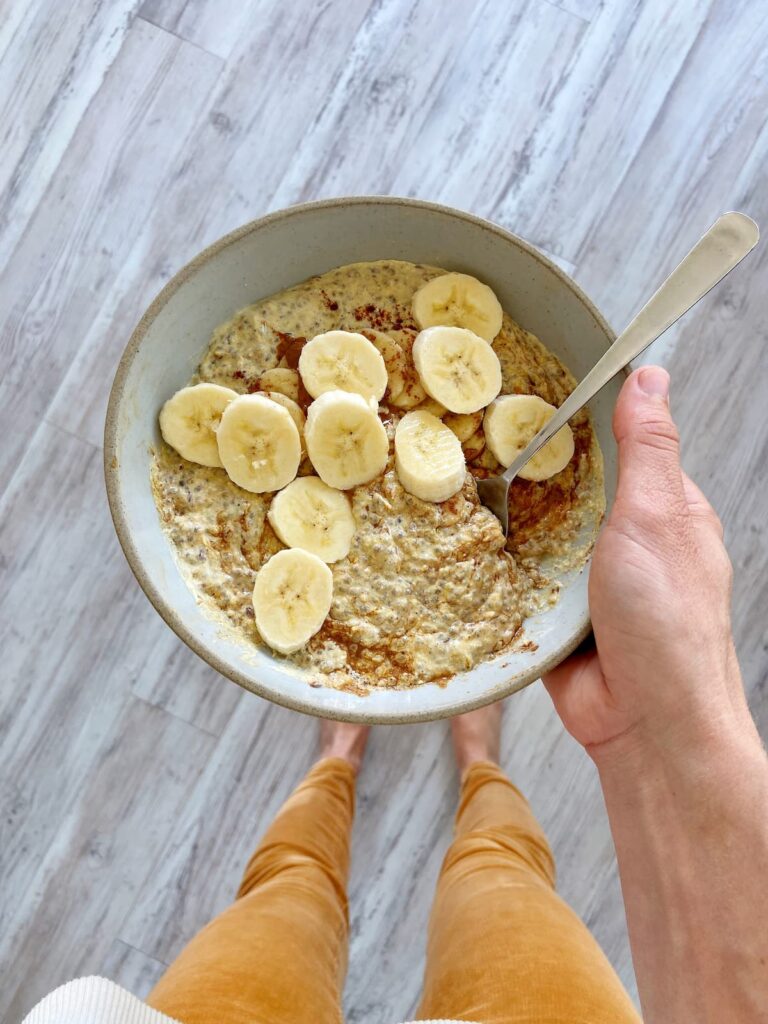
- Tropical Lemon Chia Pudding
Lunch
Dinner
The Intermittent Fasting Meal Formula
Putting it all together, this is what every meal should look like when breaking a fast:
- 4 to 6 ounces of protein
- 1 to 4 servings (10- 40 grams) fat
- 1 to 2 servings low sugar fruit
- Unlimited non-starchy veggies and herbs
If you want a full meal plan with over 100 recipes that uses this exact meal formula, grab the Complete Intermittent Fasting Bundle. Used by thousands of men and women for over 8 years to make Intermittent Fasting easy and enjoyable. Check out their stories and Intermittent fasting results for inspiration.
Tap into fat burning
Complete Intermittent Fasting Bundle
Start tapping into your natural fat-burning mechanisms with a science-backed plan that actually works. This bundle gives you the exact Protein, Fat, and Fiber roadmap used by thousands of AENpeeps to support gut health, stable energy, and long-term weight loss goals, without the restriction.
Studies
https://pubmed.ncbi.nlm.nih.gov/37000111/
https://pubmed.ncbi.nlm.nih.gov/29385178/
Categories:
Food Lists, Healthy Living, Intermittent Fasting, No-Diet Weight Loss, Smart Eating Tips,










Hi Autumn..soo grateful for all your efforts in educating us on low carb keto diet & recipes .THANK YOU! I I am a pre-diabetic, Indian origin, 59 year old female- suffering from: high cholesterol ( arteries narrowing),severe menopause symptoms(including hot flushes & brain fog),osteoporosis including (TMD Temporamandibular MandibularDisease having had major TMJ replacement surgery), arthritis,Fibromylagia,uti’s (inflammation of the bladder& urge incontinence),weak liver & kidney function & vertigo.I live in Zimbabwe with access to organic fruits ,herbs & veg in our beautiful garden.. & with access to freerange chickens grass fed bone broth.I am re-starting on intermittent fasting & the keto diet.Plz reply to my questions :-is 50 grams of carbs the maximum allowed on a keto diet? Can i have DAILY 30 grams of full fat boxed preserved pasturized milk instead of fresh milk?Are the following low in carbs-garlic ,ginger,red& green fresh Chillies, tomatoes, onions,egg fruit,peppers(green, red, yellow) pumpkin,butternut,gemsquash,patty pans,sweet potatoes, cabbage,spinach,lettuce,cucumber-?is RAW mango also high sugar/carb? Are apples,pears, Ripe pineapple & RAW green pineapple ,dates low in carbs/sugar?Is date sugar suitable in a low carb diet.. asking as I don’t like the taste of Stevia.? Can Himalayan pink salt & black salt substitute for Celtic salt in my electrolyte drinks and low carb food recipes? I have not been doing my IF & keto diet properly..I really want to correct & feel better also as grieving due to multiple deaths/ stress in our family.Plz also direct me ,BRIEFLY , to other articles websites, practioners,books etc that can help me with my health conditions mentioned above.Am grateful for your kind assistance & consideration. AISHA