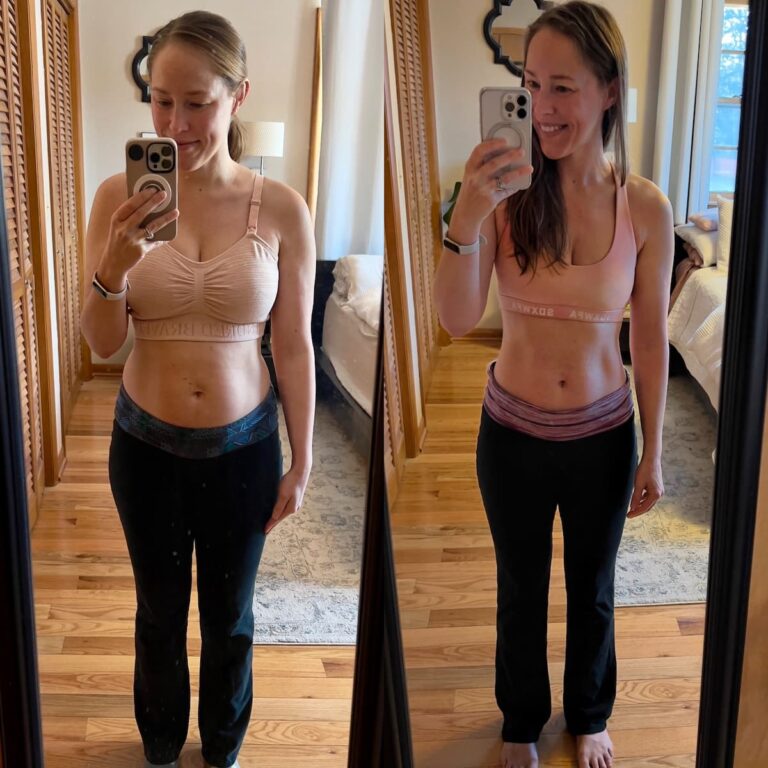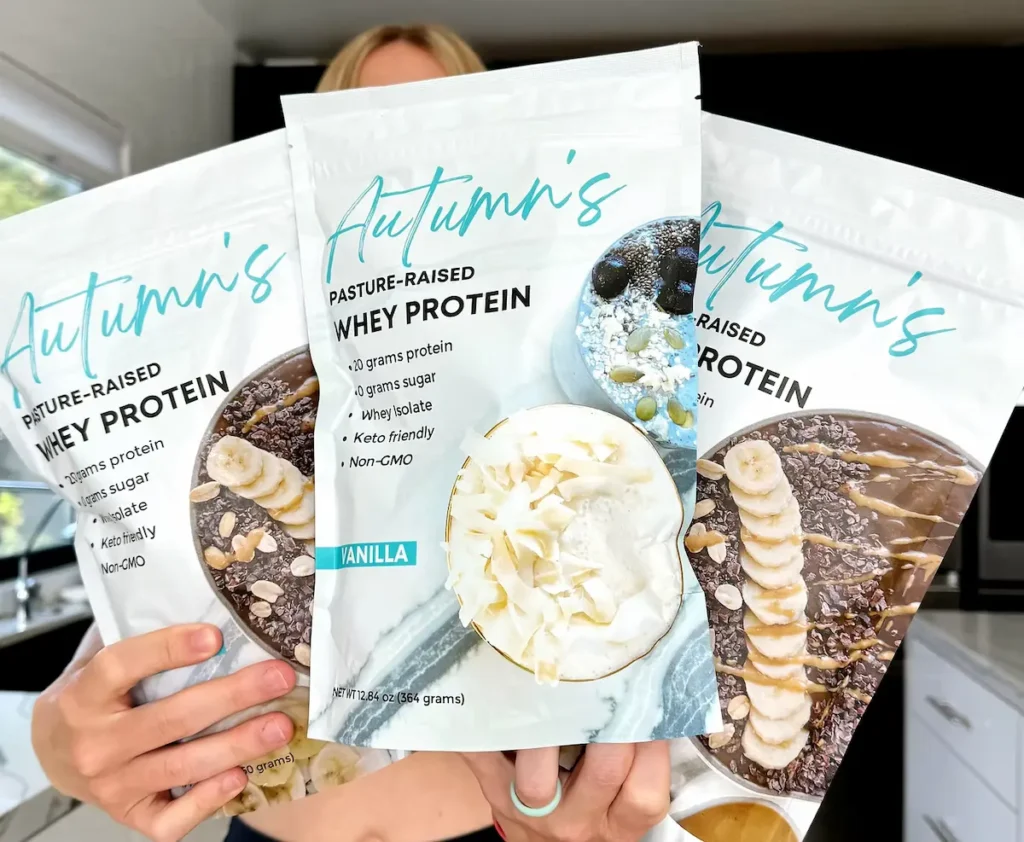


This is exactly how much protein powder per day women should use to see the best benefits without the downsides.
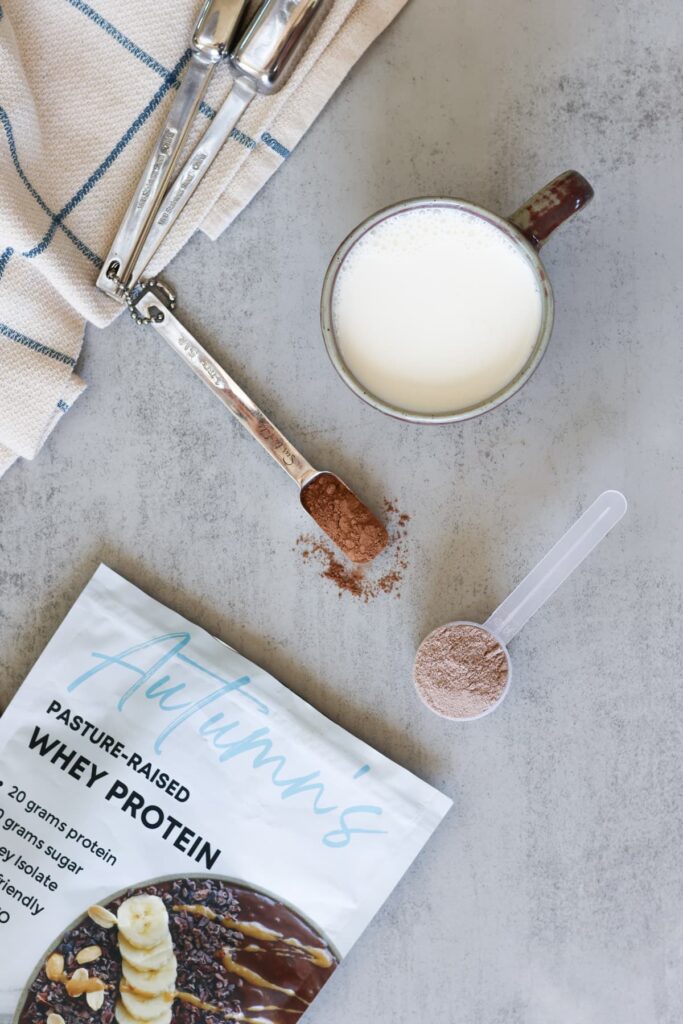
How Much Protein Powder Should You Use Per Day?
From nearly a decade of working with women on sustainable weight loss, I’ve found that most women do best with about 20–40 grams of protein powder per day. This range helps bridge the gap in daily protein needs while still leaving plenty of room for whole food protein sources.
Protein powder, especially a certain type of protein powder called whey isolate, has been extensively studied to support muscle recovery, body recomposition, stable blood sugar levels, and hunger prevention. However, specific studies have not been done on the exact amount of protein powder that is needed to see these benefits.
Instead, researchers have found that it’s crucial to hit a certain amount of total protein in a day to maximize for weight loss and support health goals. Usually the range is about 100-150 grams of protein per day — although this varies greatly from person-to-person — and it can come from a variety of protein sources such as eggs, dairy, meat, fish, and protein powder.
Pssst… curious how much protein you need in a day? I have a free protein calculator you can use HERE.
From my experience, women tend to have a pretty hard time hitting this high protein level from whole food sources alone, which is where adding a serving or two of protein powder can be incredibly helpful. But there’s definitely a sweet spot (20-40 grams per day) to maximize the benefits while minimizing or preventing the downsides. Here’s what you need to know.
What Happens When You Use Protein Powder Daily
When you use the right amount of protein powder, it helps you hit your daily protein targets — and eating more protein in general has some pretty impressive (and studied) benefits:
- Consistent protein intake: The benefits of protein come from eating it daily. Protein powder makes that a lot easier for many people.
- Reduced hunger: Protein raises hormones like peptide YY that tell your brain you’re full and satisfied.
- Focused fat loss: Higher levels of protein intake help prevent muscle loss while losing weight. This means you can focus more on burning fat while keeping muscle.
- Stable energy levels: Protein helps to stabilize blood sugar levels and prevent crashes.
- Better skin, hair and nails: These are all made from protein. Low protein intakes can result in brittle nails, hair loss and skin that looks older. On the flip side, eating enough protein can help improve the health of each of these categories.
- Less sugar cravings: By helping with blood sugar and satiety, protein can help to reduce sugar cravings, too.
- Better muscle recovery: The amino acids in protein are requirements to repair muscles post-workout. Without it, exercise can lead to muscle loss.
How Much Is Too Much?
From my experience, most women do best with keeping their daily protein powder intake in the range of 20-40 grams per day. This equates to about 2-4 scoops of protein powder, depending on the brand. Going beyond 40 grams per day can start to provide diminishing returns for most women.
What Happens When You Use Too Much?
You can’t really “overdose” on protein powder the way you might with a drug or a toxin. Protein powder is a food supplement. The body processes protein through digestion and excess protein is generally broken down and excreted as waste. That being said, there are a few things to keep in mind when using more than 40 grams of protein powder per day.
No extra benefits
Most of the benefits of protein in general tend to be capped at about 1-1.2 grams of protein per pound of body weight (ex: if you weight 150 pounds, this would be a cap of 150-180 grams protein). So you don’t typically see “extra” benefits eating beyond that range, regardless if it’s from protein powder or whole food sources.
Missing other protein sources
Replacing most of your protein with protein powder means that you’re no longer eating other whole food sources of protein, such as eggs, meat, or dairy. These are very important foods for reasons outside of just protein, including fat soluble vitamins and minerals. It’s important to still have most of your protein intake come from these sources while adding protein powder into your meals as a way to fill the gaps in your protein needs.
Digestive issues
Eating more protein requires more water, so if you eat a lot more protein without drinking enough water, then this could lead to issues like constipation, dehydration, or gas. Plus, if you’re using a poor quality protein powder and you’re sensitive to the ingredients, then eating a lot of it could lead to additional GI distress.
Kidney strain (if already pre-existing kidney issues)
Too much protein in general hasn’t been found to harm the kidneys. However, if you already have kidney problems, then you might have a harder time breaking down excess protein.
How To Use Protein Powder Safely
This is how you can use protein powder for the maximum benefits without the potential downsides. Always check with your doctor before making any lifestyle or supplement changes.
Use a high quality, lab tested protein powder
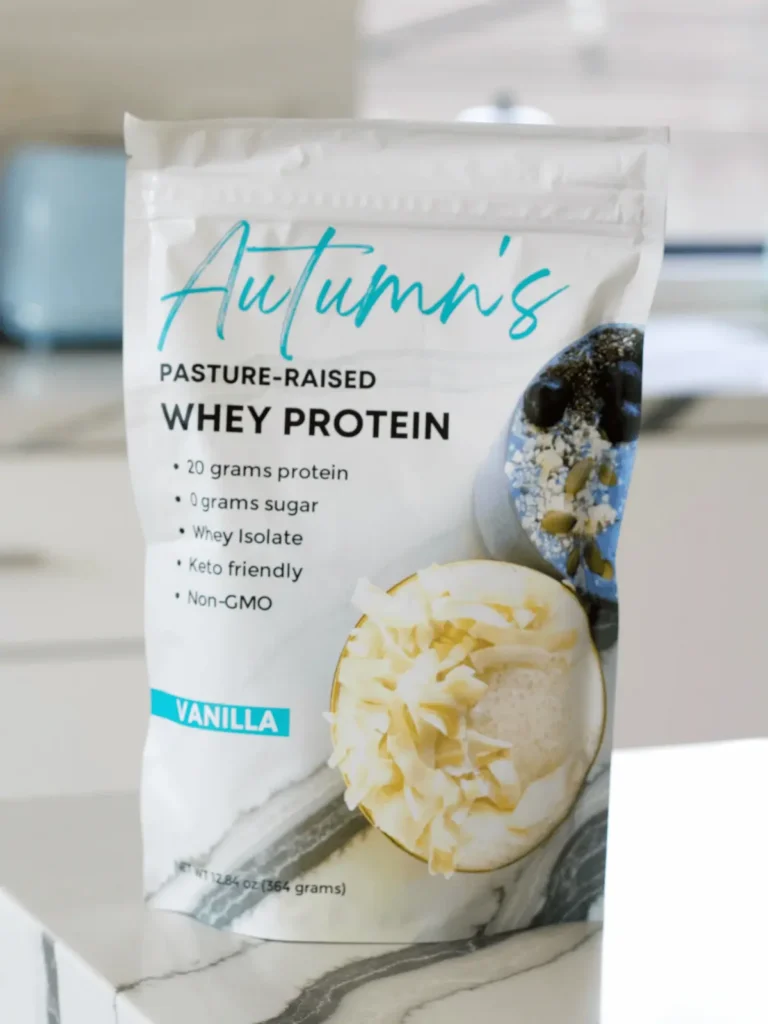
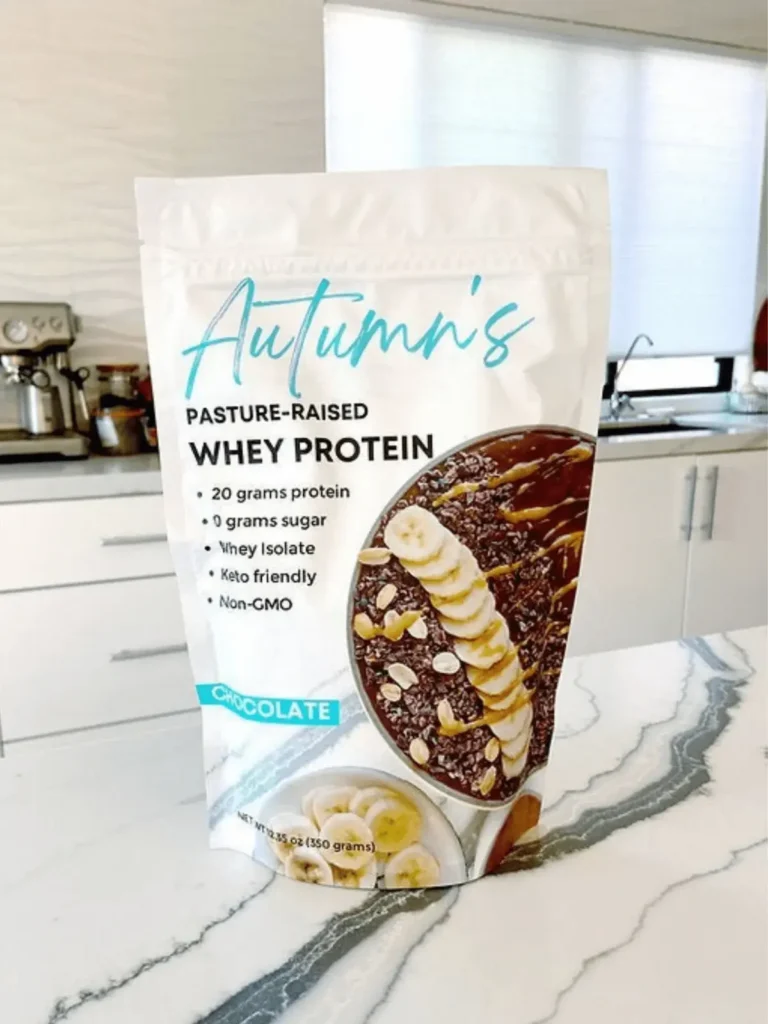
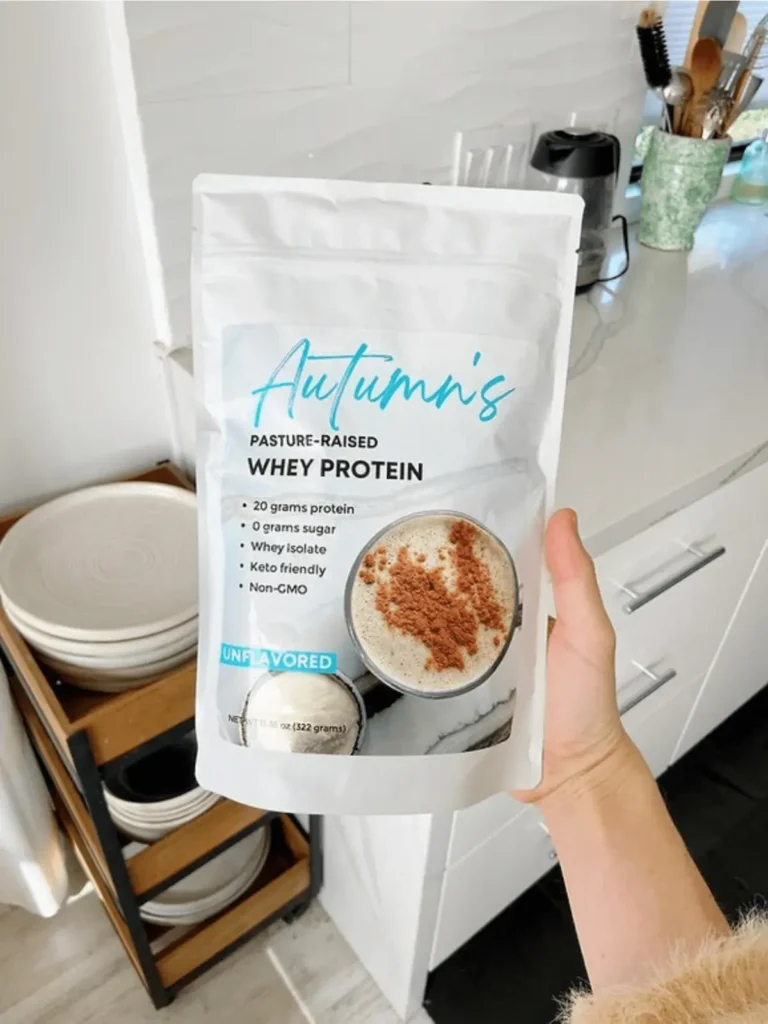
You should always check that your protein powder has been third party lab tested for purity, especially if you’re looking to reduce heavy metals or avoid gluten. With our protein, we third-party lab test every batch for heavy metals, gluten, sugar, and potential contaminants to ensure the highest quality powder for daily use.
Kickstart Your Journey
Shop Autumn’s Whey Protein Powder
Our delish bestselling zero added sugar, gluten & heavy metal tested whey protein powder!
Stick to 20-40 grams protein powder per day
If your total protein requirements are lower than 120 grams per day, then stick to 20 grams. If it’s higher, then you can use up to 40 grams per day. This is just a general guideline, not a prescription. The goal is to use protein powder to compliment and enhance your current protein intake, not replace it. Sticking to this range helps you hit that sweet spot.
Pair it with a meal
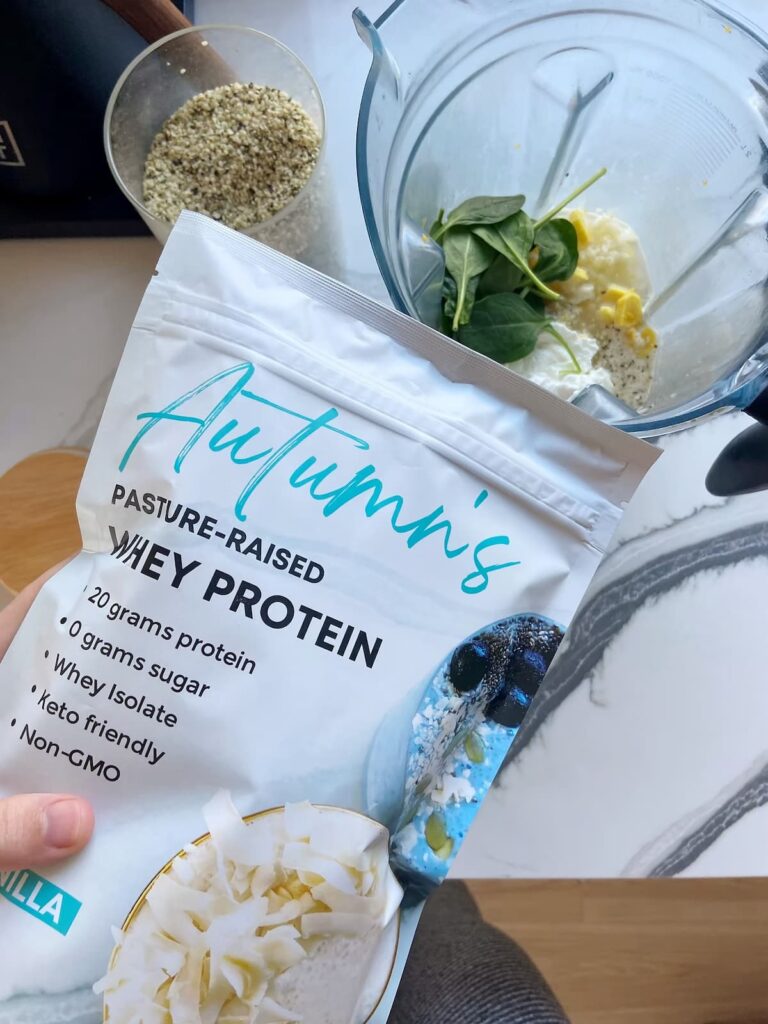
The mistake most people make is having protein powder on its own. This is problematic because you’re missing out on the necessary fat and fiber to prevent hunger and reduce cravings. By pairing protein powder with other sources of protein, fat and fiber, such as those in a meal, you can double down on satiety hormones, prevent snacking, and properly nourish your body.
Not all protein powders were designed to be eaten with food, so make sure to use one that was developed to actually taste good in real food, not just protein shakes.
Need ideas for recipes? Below are simple, community-loved protein powder recipes for weight loss.
Eat your remaining protein requirements from whole food sources
The remaining 80+ grams of protein? That should be from whole food sources like eggs, cottage cheese, greek yogurt, chicken, beef, fish, tempeh, and shrimp. These foods are nutrient-dense and really filling (hence why protein powder is so useful for filling the gap when you can’t get it from food alone).
I have hundreds (if not thousands) of tasty and simple recipes on my blog, youtube channel, and meal plans that combine whole food sources with protein powder to get the best of both worlds. You can check out my latest high protein healthy recipes HERE for inspiration.
Final Note
When done the right way, protein powder can help you eat more protein and therefore see the well-established benefits of eating more protein. Just make sure to balance it with whole foods, use a high quality protein powder, and stick to 20-40 grams per day.