

This is exactly how to use Intermittent Fasting for fat loss. The best Intermittent Fasting schedules, what’s allowed while fasting, what to eat when you break your fast, when to exercise and more! This is everything you need to know to start Intermittent Fasting today.
What Is Intermittent Fasting and Why It Works So Well For Fat Loss
Intermittent Fasting is a short, daily fast that lasts between 12 to 24 hours. Although, as a Clinical Nutritionist, I’ve seen the best fat loss results with 12-16 hours. More on that in a bit.
The reason why Intermittent Fasting works so dang well for fat loss comes down to one key hormone — insulin. Every time you eat, insulin goes up. When insulin is high, fat burning (called “lipolysis”) is shut off. This makes tapping into your body’s fat stores nearly impossible. But when insulin comes down, lipolysis (fat burning) turns back on.
It takes about 2 to 3 hours for insulin to come down after a meal. So if you eat every 2 hours (like most people), then you’re never fully tapping into fat stores.
It might sound obvious, but when you’re fasting, you’re not eating. And when you don’t eat, insulin dips back down, which triggers fat burning. This makes it uniquely helpful at fat loss because you’re taking advantage of naturally high fat burning states by strategically and consistently bringing insulin down.
But the benefits go beyond fat burning.
- Less hunger & cravings: The more often you use Intermittent Fasting, the less hungry you tend to get. This is largely thanks to a compound produced from all that extra fat burning — ketones. Ketones are formed from breaking down fat in your body. These provide fuel for the brain (hello mental clarity and focus!) and help to shut down the hunger hormone ghrelin. So you can become less hungry while also burning more body fat.
- Natural de-bloat & gut health: When you fast for at least 3 hours 45 minutes, the gut cleaning crew called the Migrating Motor Complex (MMC) turns on. This flushes out left behind food and bacteria that would normally lead to gas and bloating. So by fasting for at least 12 hours, you run through a few cycles of cleaning and can naturally de-bloat, too. It’s for this reason that those with gut health concerns like SIBO use Intermittent Fasting as a tool to improve their gut health.
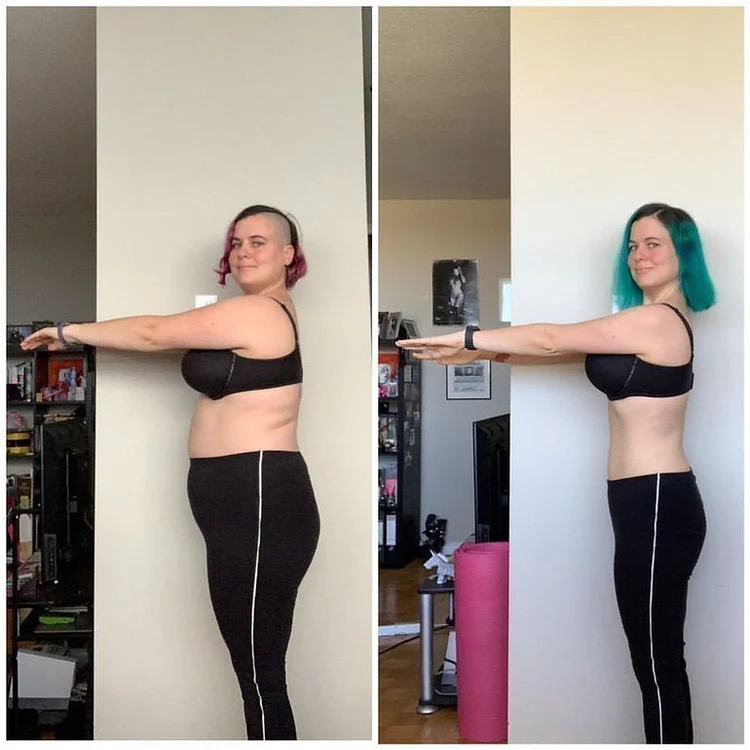
This is why people like Karola, pictured above, find that by using Intermittent Fasting (paired with properly breaking their fast), they’re able to easily and sustainably lose body fat without feeling hungry.
Amazing! So how long does it actually take to see results?
How Long Does It Take To See Fat Loss Results With Intermittent Fasting?
Intermittent Fasting works surprisingly quickly. It’s not unusual for people in our community to lose 2 to 5 pounds in the first week. This is a combination of true fat loss and water loss.
As insulin drops, it also tells the kidneys to release excess water and sodium, which can add to the total first week weight loss. This is not fat loss, but it’s also not arbitrary. This release of water from Intermittent Fasting has been shown to help lower blood pressure in those with hypertension.
Research shows most people tend to lose 1 to 1.4 pounds per week on average with a standard 16 hour fast. Now it’s important to note, that this is only when Intermittent Fasting is used without any dietary changes. But when you break your fast the right way, you can tend to see significantly faster progress.
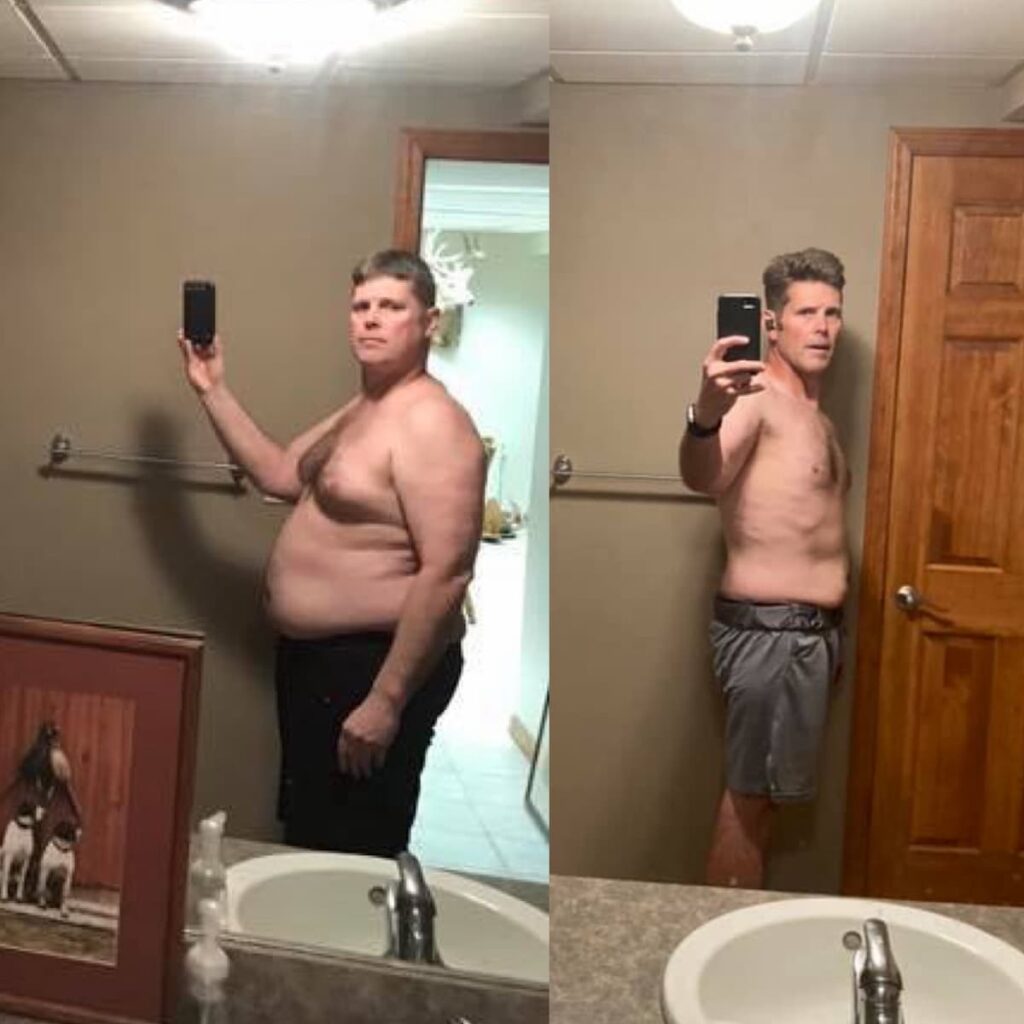
For example, Ron (pictured above) lost 70 pounds in 6 months. That’s an average of 3 pounds per week — more than double the weight loss research predicted with Intermittent Fasting alone. But Ron wasn’t just using Intermittent Fasting. He was also breaking his fast with protein, fat and fiber (using the Complete Intermittent Fasting Bundle recipes and protocols). This helped him to more efficiently burn fat as fuel even after his fast was over.
When you break your fast properly (more on that in a bit), you can double down on the fat loss perks to speed up your results.

What To Eat During Your Eating Window — And What To Avoid
For maximum and sustainable fat loss perks with Intermittent Fasting, you need to break your fast with protein, fat and fiber. This combination helps to maximize fat burning with Intermittent Fasting by:
- Protecting muscle: Studies on Intermittent Fasting combined with eating more protein show more fat loss and more visceral fat loss than just fasting alone. This is largely thanks to the muscle protecting perks of protein, which drives more of the weight loss to come from fat.
- Lowering insulin spikes: Protein, fat and fiber stabilizes blood sugar and prevents insulin from spiking too high after a meal. This makes it easier for your body to shift back into a state of fat burning between meals, too.
- Reducing hunger: Protein, fat and fiber are highly satiating. They raise hormones like peptide YY, GLP-1, and CCK that tell your brain you’re full. This results in less (or zero) snacking which makes it easier to shift back into fat burning between meals in addition to the fast.
The Best Proteins To Eat
Each meal should be centered around high quality, complete proteins (aiming for 30+ grams protein per meal). Great options include:
Meat, Fish & Poultry
- chicken
- turkey
- beef/bison
- lamb
- pork
- goat
- fatty fish
- white fish
- shellfish
Eggs & Dairy
- eggs
- cottage cheese
- greek yogurt
- skyr
- whey isolate protein powder
Plant-Based
- tempeh
- plant-based protein powder
- plant-based greek-style yogurt
The amount of protein each person needs depends on your goal, age, and activity level. Checkout my free protein calculator for how much you need to eat to lose body fat.
The Best Fats To Eat
Each meal should have at least one serving of a high quality, whole food fat. Great options include:
- chia seeds
- peanut butter
- almond butter
- flax seeds
- avocado
- olives
- pumpkin seeds
- sunflower seeds
- coconut butter
- coconut flakes
The Best Fibers To Eat
Each meal should have at least one high fiber food. The best options for fat loss are those naturally found in fats (like avocado or chia seeds) rather than grains. Grains can spike blood sugar and therefore insulin, making it less ideal for a fat loss goal.
Great high fiber foods include:
- chia seeds
- avocado
- raspberries
- blackberries
- apple
- pear
- edible basil seeds
- beans
- lentils
Every meal in the Complete Intermittent Fasting Bundle combines ingredients rich in protein, fat and fiber in delicious recipes like Pumpkin Chili Goodness, Coconut Berry Chia Pudding, and Beautifying Arugula Salad.
Tap into fat burning
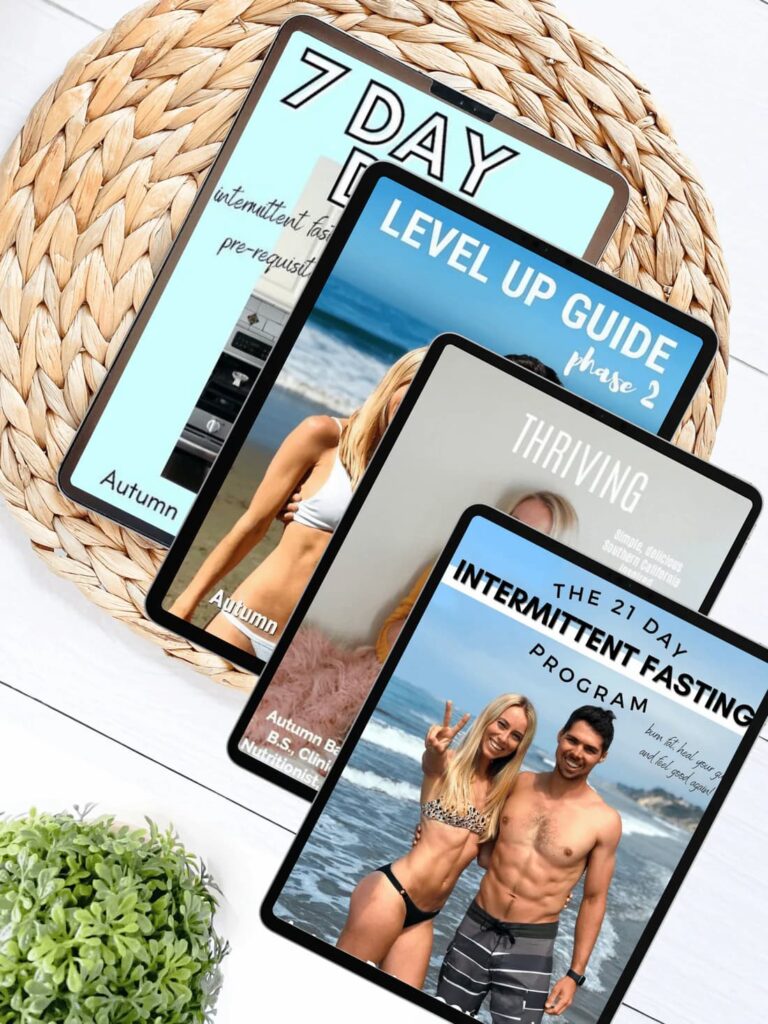
Complete Intermittent Fasting Bundle
Start tapping into your natural fat-burning mechanisms with a science-backed plan that actually works. This bundle gives you the exact Protein, Fat, and Fiber roadmap used by thousands of AENpeeps to support gut health, stable energy, and long-term weight loss goals, without the restriction.
What to Avoid: High Carb, Low Protein Meals
Foods that are high in carbs and low in protein should be avoided when you break your fast. Carbs cause the biggest spike in blood sugar and therefore insulin. This aggressively shifts the body out of fat burning and into fat storing. As a result, you’ll be hungry quickly, end up snacking, and miss out on the additional low insulin perks during the eating window.
Here are common high carb, low protein foods to avoid:
- plain oatmeal
- added sugar in any form
- soda
- energy drinks
- sweetened coffee or tea
- cereal
- pasta
- bread, toast and bagels
- most grains and pseudograins (white rice, quinoa)
Tasty Intermittent Fasting Meals to Get You Started
Knowing the basics of protein, fat and fiber is the first step. But putting it together into meals that you actually look forward to eating is where the magic truly happens. Below are four delish, Intermittent Fasting approved recipes you can test out today.
- Tropical Lemon Chia Pudding; A community favorite! Easy to meal prep for busy days.
- Blueberry Pie Smoothie; A filling smoothie to keep you satisfied for hours.
- The Best Low Carb Zucchini Lasagna: Trust me… you won’t even realize this doesn’t use pasta.
- The Best Healthy Shepherd’s Pie: A family favorite for a hearty, satisfying dinner.
The Best Intermittent Fasting Schedule (That’s Actually Realistic)
A longer fast doesn’t mean better results. From my experience as a Clinical Nutritionist, the best fat loss falls in the range of a 14 to 16 hour daily fast. Here’s why:
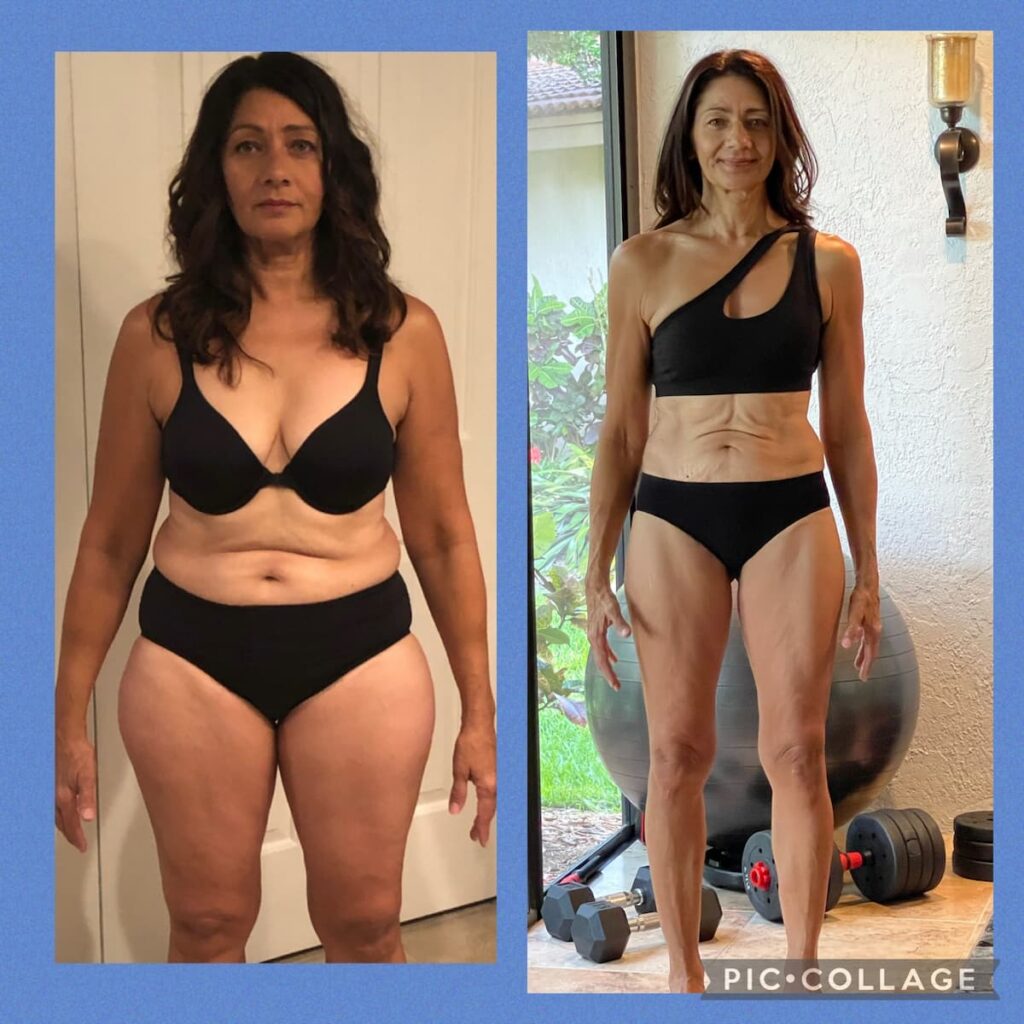
- It’s easy to do: Most people can comfortably work their way up to a 14 or 16 hour daily fast without it disrupting their day-to-day life very much. This is one of the reasons why community members following the Complete Intermittent Fasting Bundle (like Jeannette, pictured above) have been able to see sustainable results (even in her 50s!).
- You can actually hit your protein goals: The best fat loss results with Intermittent Fasting are seen when it’s paired with eating high protein. Because protein is so dang filling, it’s hard to split it up into just two (or one) meal a day. By fasting for longer than 16 hours, you inevitably have to eat just one or two meals — so protein gets sacrificed. By fasting for 14 to 16 hours per day, your eating window is large enough to fit three full meals and more easily hit your protein targets.
- Insulin drops significantly: Even with a 12 hour daily fast, you can reap the insulin lowering perks. So if fat loss is the primary goal, you don’t need to aggressively fast or skip meals. In fact, longer fasting often has a steep drop off rate because it’s not practical. Instead, you can see sustainable, lasting progress with gentle 14 to 16 hour fasts instead.
The 14 Hour Intermittent Fasting Schedule
If you choose to fast for 14 hours, here’s an example of what your schedule could look like:
- 8am: Break your fast with protein, fat and fiber. Don’t eat again until lunch.
- 12:30pm: Eat a protein, fat and fiber lunch. Don’t eat again until dinner.
- 5:30pm: Eat a protein, fat and fiber dinner and stop eating by 6pm.
- 6pm: Start your fast. Stick to fasting approved drinks from now until 8am the next day.
As you can see, with a 14 hour Intermittent Fast, your schedule can still mimic daily life without having to sacrifice meals with loved ones or friends.
The 16 Hour Intermittent Fasting Schedule
If you choose to fast for 16 hours, here’s an example of what your schedule could look like:
- 10am: Break your fast with protein, fat and fiber. Don’t eat again until lunch.
- 1:30pm: Eat a protein, fat and fiber lunch. Don’t eat again until dinner.
- 5:30pm: Eat a protein, fat and fiber dinner and stop eating by 6pm.
- 6pm: Start your fast. Stick to fasting approved drinks from now until 8am the next day.
Notice that even with a 16 hour fast, you aren’t skipping meals. You’re simply shifting your first meal a couple of hours later while still enjoying three solid, satisfying plates.
Which schedule is right for you? You can take my free Intermittent Fasting Schedule Quiz to help determine which fast works best for your goals.

What Breaks a Fast? (And What’s Safe to Drink?)
When Intermittent Fasting with the goal of fat loss you have more flexibility with what’s “allowed” during the fast. It comes back to our friend insulin.
Remember, when insulin is low, fat burning turns on. So as long as you keep insulin low, you’re technically “fasting” (or what’s known as “fasting mimicking”). Protein and carbs both spike insulin and therefore can’t be used during the fast.
This is why adding collagen to your coffee or some sugar to your tea will break a fast — they’re both sources of protein and carbs.
What Breaks a Fast (Avoid These During Your Fasting Window)
- Protein sources: collagen powder, milk, bone broth, protein powder.
- Carbohydrate & sugar sources: Honey, agave, fruit juices, sweetened creamers.
- Artificial sweeteners: Certain artificial sweeteners can still trigger insulin without actually having sugar. This is known as the cephalic phase insulin response.
What You Can Safely Drink (100% Fasting Approved)
Pure fats, certain herbs, some fruits and electrolytes don’t spike insulin at all. And you can use these to your advantage during the fast to reduce hunger, especially when you’re new to Intermittent Fasting.
- Water & Mineral Water: plain, sparkling, or infused with a small squeeze of lemon/lime or herbs (like mint).
- Black coffee & unsweetened teas: Black coffee, Espresso, Green tea, black tea, herbal tea or yerba mate.
- Unsweetened Electrolytes: High quality sodium, magnesium and potassium supplements. Essential for preventing fasting related headaches.
- Pure fats: MCT, grass-fed butter, coconut oil, cacao butter, small amounts of heavy cream or half and half.
The Beginner “Bridge”: Keto Coffee
When you first start fasting, hunger might still be high because your body hasn’t adapted to burning fat as fuel yet. This is where Keto Coffee can be a game changer.
Keto coffee is made with a small amount of grass-fed butter (or cacao butter you’re if plant-based) and coconut oil (or MCT oil). Neither of these spike insulin, but it does reduce hunger. So using Keto Coffee during your fast can help to bridge the hunger gap while still keeping insulin low. It’s also frothy, delicious and oh so tasty.
Keto Coffee is a tool we use in the Complete Intermittent Fasting Bundle and it’s particularly useful for beginners or those struggling with hunger in the beginning.
Want the full list? Read the 10 things you can add to coffee without breaking a fast.
How To Handle Hunger and Social Life
In the beginning, some hunger during the morning fast (not the evening) is to be expected. The body is re-learning how to burn fat as fuel and until it does so, some hunger can occur.
But if you’re really struggling the first few mornings, Keto Coffee (as detailed in the section above) is an incredible tool. This hack alone can make the fast almost a little too easy — many of our community members report back forgetting to eat break-fast at times!
However, you should not feel hungry during the eating window or after dinner. If you do, then this is a sign you broke your fast wrong. Remember, protein, fat and fiber shut down hunger by raising hormones that tell your brain you’re full. Under-eating any one of those will make you hungry and can lead to worse fat loss outcomes.
If You’re Feeling Hungry During Your Eating Window, Try This Checklist
- Increase Your Protein: Add an extra 1 to 2 ounces of complete protein (like chicken, steak, eggs or whey isolate protein powder) to each meal.
- Don’t Skip Meals: Make sure you are comfortably fitting three full, protein-rich meals into your window rather than skimping down to two small ones.
- Add a Whole-Food Fat + Fiber Combo: Include a serving of high-fiber fats (like half an avocado, chia seeds, or a handful of olives) with every meal.

Fasting Tip From The Nutritionist
Autumn Bates, CCN, MS, BS, CPT
Don’t skip a meal. Eating enough protein during the eating window is required to prevent muscle loss and see the best fat loss outcomes. Instead, eat three meals optimized with protein, fat and fiber — like my Viral Dirty Cabbage recipe.
What About My Social Life?
You can still Intermittent Fast and have a social life. The Complete Intermittent Fasting Bundle shares a variety of tools for how to have the best of both worlds. But one great strategy is Window Shifting.
Window Shifting is when you shift your eating window by a couple of hours for one day to accommodate a social outing.
How Window Shifting Works in Real Life
- If your normal eating window is 10:00 AM to 6:00 PM, but you have dinner plans starting at 6:30 PM, simply shift your eating window that day to 11:30 AM to 7:30 PM.
- Enjoy your dinner with friends without stressing about the clock!
- The very next morning, simply shift back to your standard 10:00 AM eating window.
While this results in a slightly shorter fast for that one night, it keeps your momentum going and ensures Intermittent Fasting fits seamlessly into your life for the long haul.
Common Intermittent Fasting Side Effects (And How To Avoid It)
As the body re-learns how to burn fat as fuel, there are some temporary side effects. However, most. are entirely avoidable. Here’s how:
Headaches and Low Energy
- Why it happens: This is usually from dehydration or electrolyte imbalance. Remember, low insulin levels while fasting can make you lose water and sodium.
- How to fix it: It’s important to rehydrate with water and electrolytes to avoid the associated dehydration headache. Aim for at least 16 ounces during your fast with a high quality, zero sugar electrolyte.
Read the Full Guide to Electrolytes With Intermittent Fasting.
Hunger
- Why it happens: The body hasn’t learned to switch energy sources efficiently yet. As it lags behind, hunger can go up.
- How to fix it: This tends to diminish after a few days (thanks to ketones). But in the meantime, you can use Keto Coffee during the fast to shut down hunger.
Bloating When You Break a Fast
- Why it happens: Breaking the fast with high carb foods or not thoroughly chewing the meal. Both can lead to rapid fermentation in the gut and bloating.
- How to fix it: Break your fast with a protein, fat and fiber-rich meal. Choose something that’s easy to digest, like my Citrus Green Protein Smoothie.
Muscle Cramps
- Why it happens: Again, a dehydration and electrolyte imbalance issue.
- How to fix it: You know the drill. Water and electrolytes first thing in the morning!
Cold Hands and Feet
- Why it happens: This is often due to blood flow being redirected to fat tissue so your body can start using more fat as fuel. But sometimes this can also be the result of nutritional deficiencies or under-eating.
- How to fix it: This is common and can be short lived. Once the body becomes better at using ketones as fuel, it tends to go away. However if it persists then you might be lacking key nutrients or just not eating enough. Make sure to stick to three meals (no skipping!) and emphasize nutrient dense sources of protein, fat and fiber. You may also need supplements to cover your needs if you can’t get it from food alone. Talk with your doctor and nutritionist about your specific needs and goals.
Mood Swings (aka “Hanger”)
- Why it happens: Before your body relearns how to burn fat as fuel, it relies on carbs This can lead to sudden dips in blood sugar that drives irritability and hunger — cue “hanger”.
- How to fix it: Use Keto Coffee! This is the best bridge to provide fuel and prevent hanger while relearning how to more efficiently burn fat.
Exactly How To Workout With Intermittent Fasting
When you first start intermittent fasting, it is often best to scale back the intensity of your workouts for the first 1 to 2 weeks.
Strenuous, high-intensity exercise (like HIIT, heavy sprinting, or grueling bootcamps) relies heavily on stored glycogen (carbohydrates) for rapid fuel. In the beginning, before your body has fully adapted to tapping into stored body fat, forcing high-intensity workouts during a fast can feel miserable and trigger a spike in stress hormones.
Instead, prioritizing movement that specifically uses fat for fuel helps speed up your body’s natural “fat adaptation” process.
The Best Early Stage Exercise: Daily Walking
Walking is a low-intensity steady-state activity that relies predominantly on fatty acid oxidation (fat burning). Walking during your fast also naturally lowers the stress hormone cortisol, which helps improve insulin sensitivity and keeps blood sugar stable.
Walking Best Practices While Fasting
- Walk during your fasting window: Going for a 20 to 30-minute walk in the morning before breaking your fast teaches your body to efficiently burn stored body fat for daily activity.
- Aim for at least 8,300 steps per day: Research shows this threshold captures most of the health benefits of walking.
Adding Strength Training for Long-Term Fat Loss
Once you are adapted to fasting, layering in progressive strength training (2 to 5 days per week) is essential. Resistance training prevents muscle loss, protects bone density, and prevents your metabolic rate from slowing down as you lose weight.
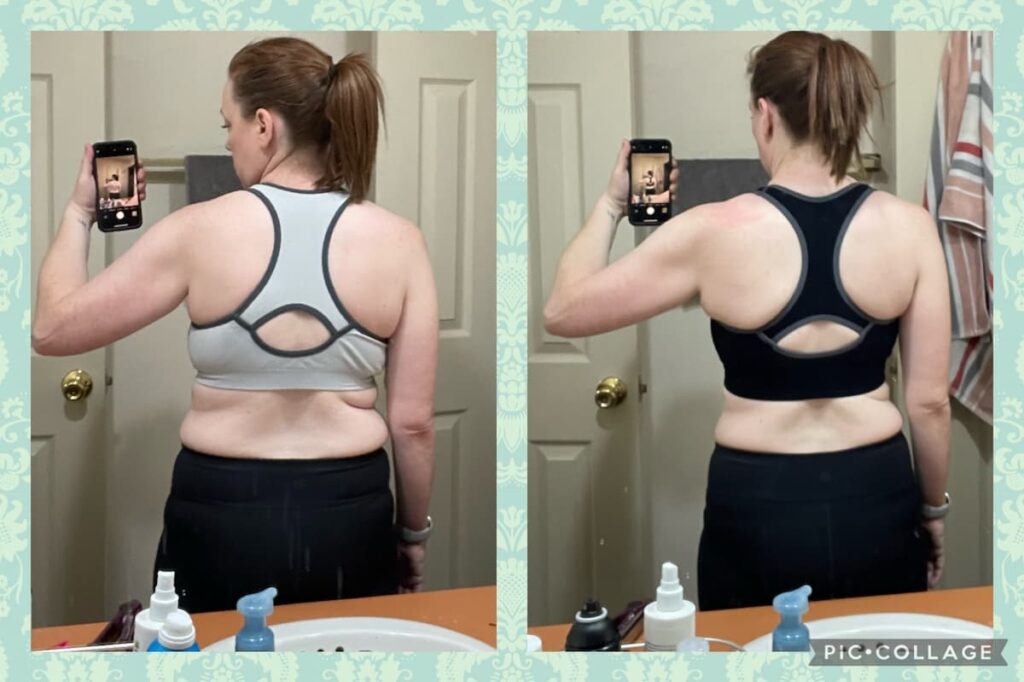
It is also the single best tool to break through a fat loss plateau! For example, one of our community members, Kristen (pictured above), initially lost weight with fasting alone, but then hit a plateau. Once she added the strength workouts from the Complete Intermittent Fasting Bundle to her routine, she broke through the wall and lost another 15 pounds.
This is why the Complete Intermittent Fasting Bundle includes targeted strength training protocols — to help maximize for fat loss while also keeping muscle.
Workout Timing: Should You Lift Fasted or Fed?
You can perform strength workouts either at the end of your fast or during your eating window. Contrary to popular belief, you don’t have to eat protein within 30 minutes of your workout (the “anabolic window”). As long as you eat enough protein throughout the day, your muscles will still recover. So just find a time that works for you and that you can consistently fit in.
Example Day of Intermittent Fasting For Fat Loss
Here’s how your full day of a 14 hour Intermittent Fast might look.
- 6am: Wake up and hydrate.
- 6:15am: 30 minute walk or strength training.
- 7am: Shower and get ready for the day.
- 7:30am: Prepare your break-fast (smoothies are perfect for on-the-go!).
- 8am: Head to work.
- 8:30am: Start work and break your fast.
- 12:30pm: Eat lunch.
- 5:00pm: Head home and prepare dinner.
- 6:00pm Eat dinner.
- 6:30pm: Stop eating and start your fast.
- 8pm: Drink herbal tea and wind down.
- 9:30pm: Go to bed.
Of course, your specific day will vary depending on your schedule. Adjust according to your work and social life.
5 Big Mistakes To Avoid (So You Don’t Gain Weight)
These are the most common Intermittent Fasting mistakes I see every day that makes people gain weight.
Mistake #1: Skipping a Meal
Intermittent Fasting is not about eating less — rather it’s about eating less often. If you skip a meal, you will not hit your protein needs. Remember, research shows that the best fat loss perks comes from pairing high protein with Intermittent Fasting. Stick to three full meals in your eating window.
Mistake #2: Doing 24 Hour Fasts To “Reset”
There can be therapeutic perks to longer fasts. But after working with hundreds of clients, I’ve found the vast majority of people use a 24 hour fast as a quick way to boost fat loss. Not only will this result in too little protein, but it’s not sustainable. Stick to a fast you can maintain while still eating three full meals.
Mistake #3: Adding Collagen To Your Coffee While Fasting
Collagen is a protein so it will break a fast. Keep this to your eating window.
Mistake #4: Breaking Your Fast With A High Carb Meal
Oatmeal, cereal, bagel, toast — all of these have a tendency to spike blood sugar and insulin. Instead, break your fast with a meal rich in protein, fat and fiber — like those in the Complete Intermittent Fasting Bundle.
Mistake #5: Fasting Longer Because You’re Not Hungry
This is essentially the same as mistake #1, but more accidental. Intermittent Fasting can reduce hunger. It can also change your perception of hunger. You no longer feel starved when you go to eat — which is great! But you still need to eat (or you’ll miss the protein target). Stick to three meals and don’t fast longer than 16 hours.

Intermittent Fasting For Women: What To Change For Best Results
Research on Intermittent Fasting in women have shown that it does not affect reproductive or bone health, increase eating disorders or disturb sleep.
In fact, studies on Intermittent Fasting in woman have shown that it can improve symptoms of polycystic ovarian syndrome and premenstrual syndrome.
The female brain is highly responsive to long periods of time without food or low calorie intake. This is why I always recommend a more gentle, sustainable approach to Intermittent Fasting:
- 14 to 16 hour daily fasts
- 3 nutrient-rich meals packed with protein, fat and fiber
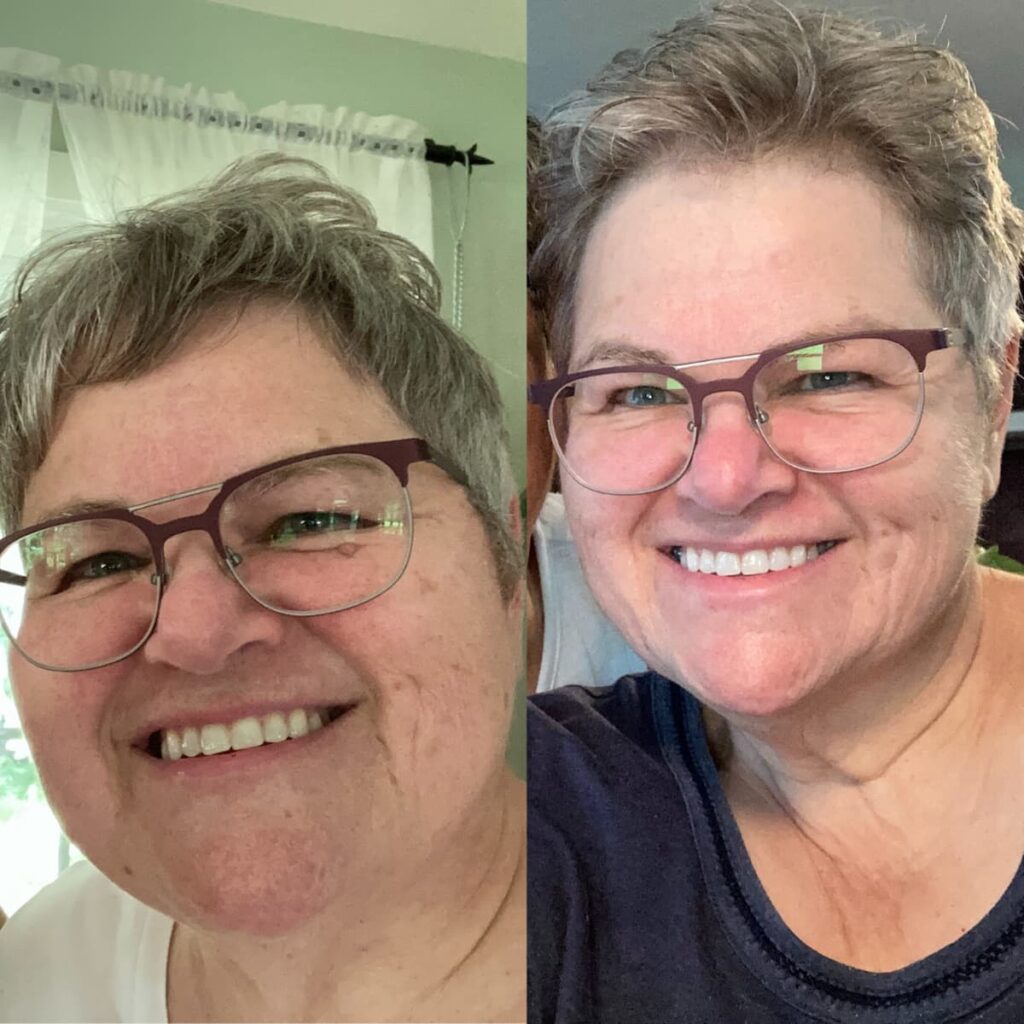
The Complete Intermittent Fasting Bundle uses this exact approach to help women, like Jenny (pictured above), sustainably achieve their goals.
Over 40? Here’s How To Optimize Your Intermittent Fast
If you’re over 40, you have unique concerns that need to be addressed with creating your Intermittent Fasting. After the age of 40, a few things happen:
- Insulin resistance goes up: This can make it harder to tap into fat burning and easier to gain weight.
- Muscle mass goes down: This drives even more insulin resistance.
- Bone loss accelerates: Putting you at a higher risk of osteoporosis and hip fractures in the future.
- Anabolic resistance increases: Your body becomes less response to protein, so you need more of it to see the same result — about 25% more.
Because Intermittent Fasting can reduce hunger, fitting in enough protein to support fat loss and prevent bone loss can be uniquely challenging — but not impossible. The largest demographic in our community are those who are 40+.
How to Fast If You’re 40+
- Choose a 12 to 14 hour fast: This allows more time for you to fit all that protein in without feeling overly stuffed.
- Know your protein needs: If you don’t know what you need, then you’ll always be short! Checkout my free protein calculator that also factors in age so you know your numbers.
- Focus on easy to digest proteins: Low volume, easy to chew proteins will help you fit in more without feeling overly stuffed. Great options include whey protein isolate, ground beef, ground chicken, ground turkey, cottage cheese, and greek yogurt.
- Never skip a meal: I’ve said this before, but it’s even more important as you age.
- Add in strength training: This is critical for protecting precious muscle and bone as you age. If you’re new, checkout the strength training program in the Complete Intermittent Fasting Bundle for a great place to start.
Kickstart Your Journey
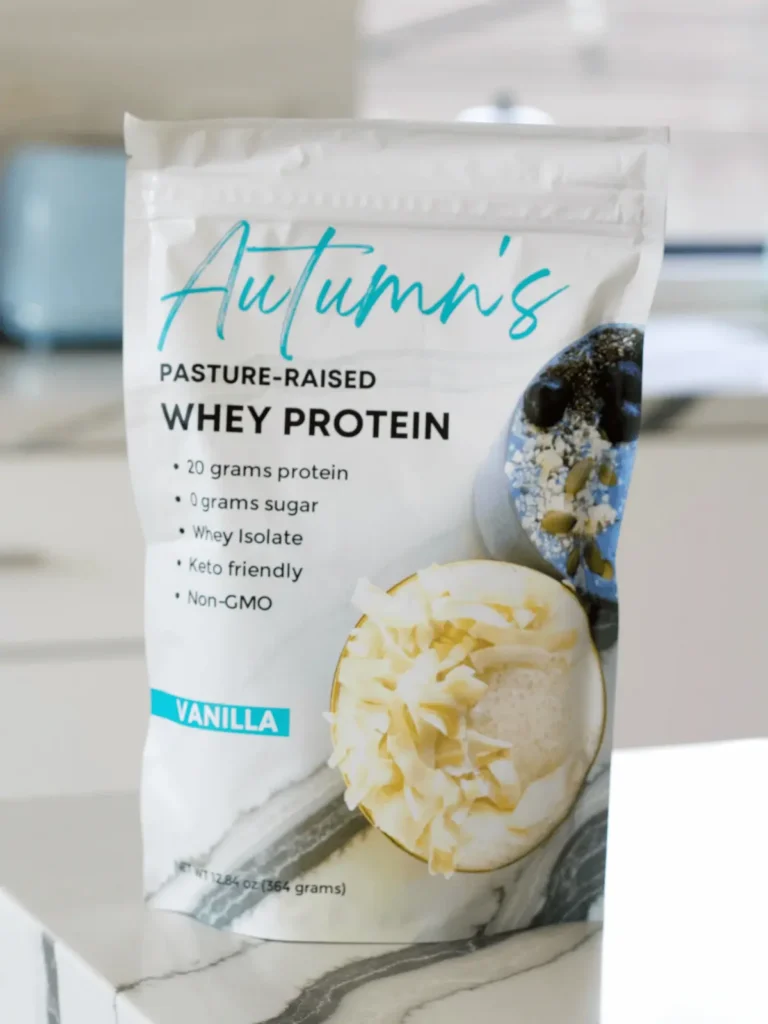
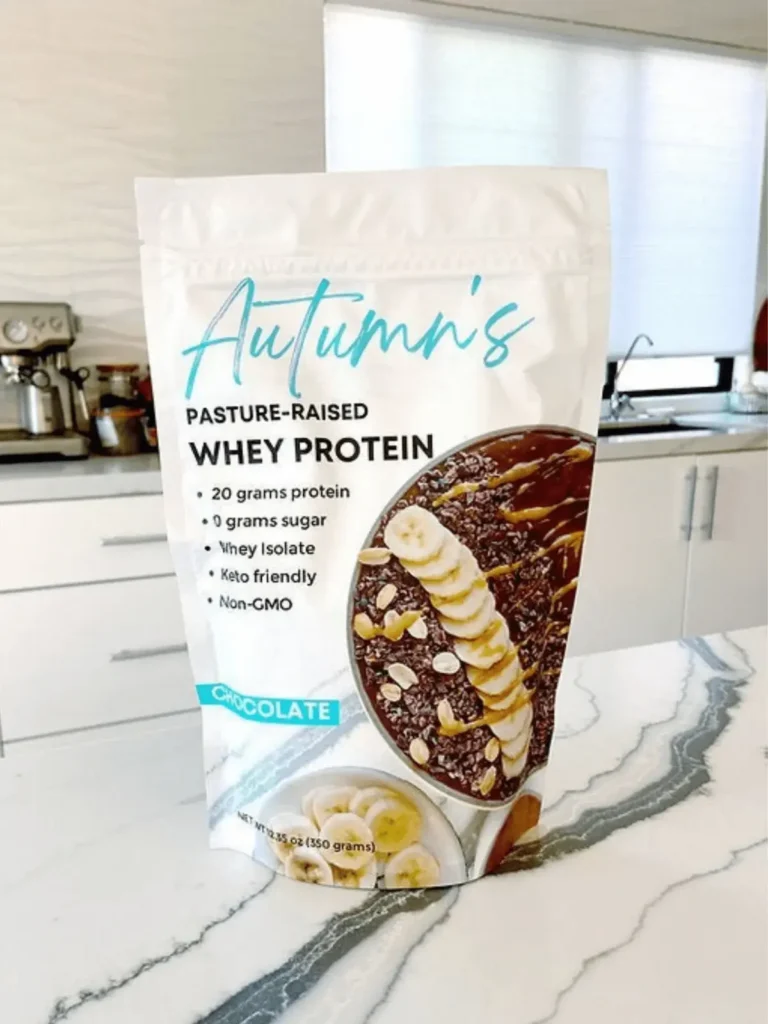
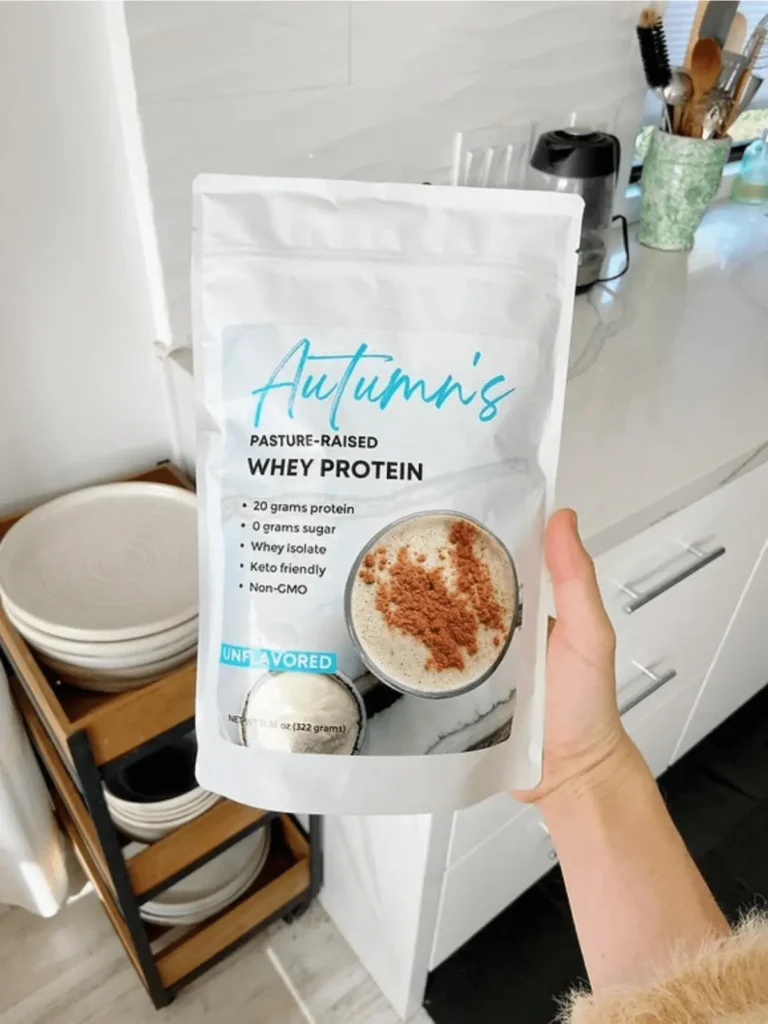
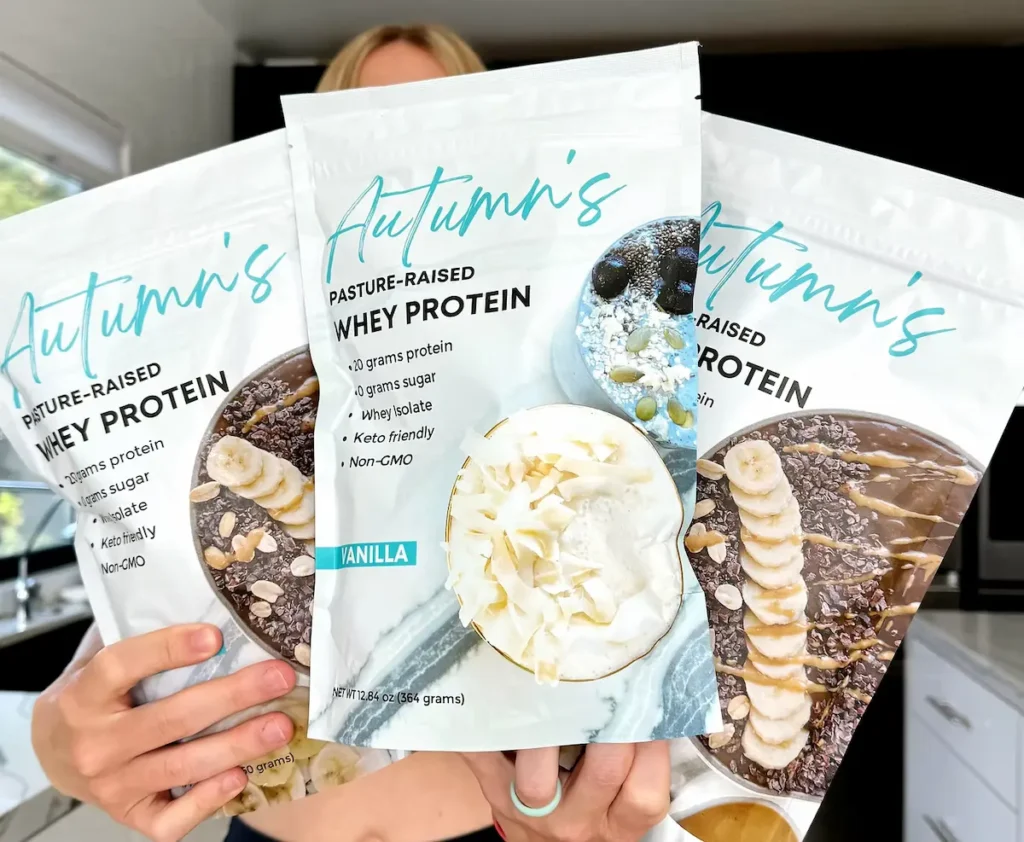
Shop Autumn’s Whey Protein Powder
Our delish bestselling zero added sugar, gluten & heavy metal tested whey protein powder!
Frequently Asked Questions With Intermittent Fasting
It’s not advised. This is the time when the body requires even more nutrients to support your own body and the new baby. Intermittent Fasting will always be here for you when you’re ready!
No. In fact fasting too long can lead to a higher percentage of weight loss coming from muscle rather than fat. You need to balance the benefits of eating with the benefits of fasting. Both are needed to prioritize fat loss specifically.
Most supplements can be taken during the fast. However, fat soluble vitamins are best absorbed with food. If a supplement has any carbohydrates (such as gummy vitamins), then these will break a fast. As for medications, certain ones do need to be taken with food or at specific times of day. Check with your doctor and let them know about your fasting schedule so that you can time your medications appropriately.
Research shows that thyroid levels are not changed while fasting, even in those who are hypothyroid. However, there still aren’t a lot of studies on this topic. For this reason, sticking with a gentle fast (such as 12 to 16 hours) and still eating three meals would be a prudent approach. Always check with your doctor first, especially if taking medication.
Starting You Intermittent Fasting Journey
Now it’s time to start your Intermittent Fasting journey! Remember to pick a sustainable window (14 to 16 hour daily fasts) and to properly break your fast with protein, fat and fiber. This approach has been used by thousands of our community members around the world for consistent and sustainable progress.
If you’re looking for a plan that puts all this information together for you — check out our Complete Intermittent Fasting Bundle. The exact science-backed tips, delicious recipes and simple schedules to help you feel great and tap into fat burning mechanisms. I can’t wait for you to start your journey!
Tap into fat burning
Complete Intermittent Fasting Bundle
Start tapping into your natural fat-burning mechanisms with a science-backed plan that actually works. This bundle gives you the exact Protein, Fat, and Fiber roadmap used by thousands of AENpeeps to support gut health, stable energy, and long-term weight loss goals, without the restriction.
Studies
Intermittent Fasting and Blood Pressure
Intermittent Fasting and Protein Pacing
Intermittent Fasting For Women