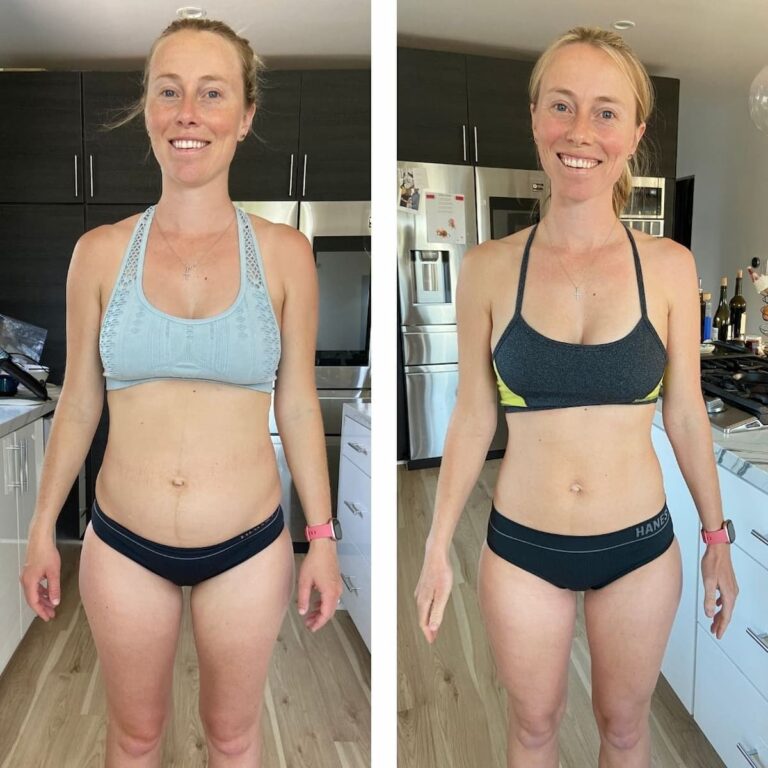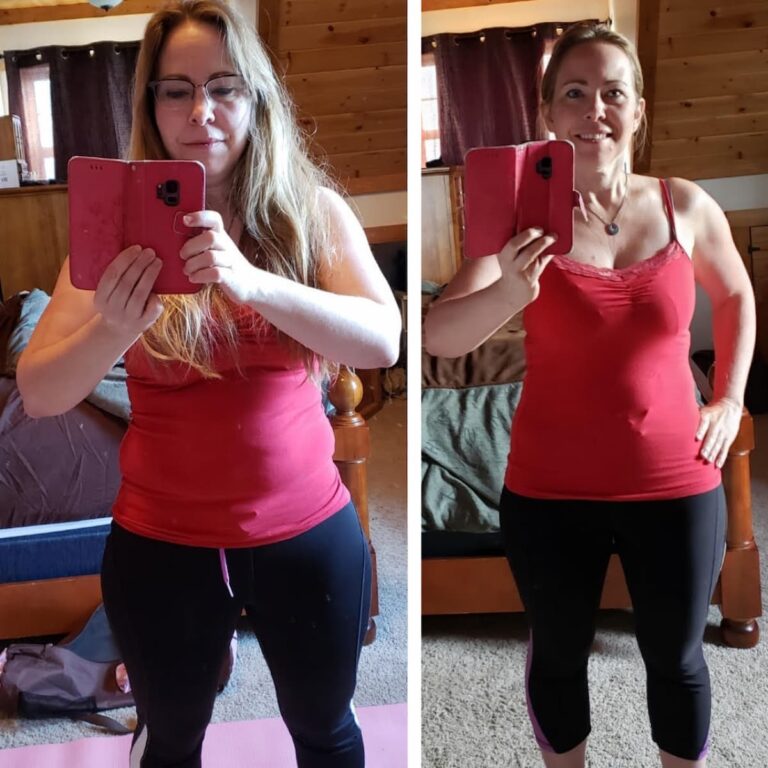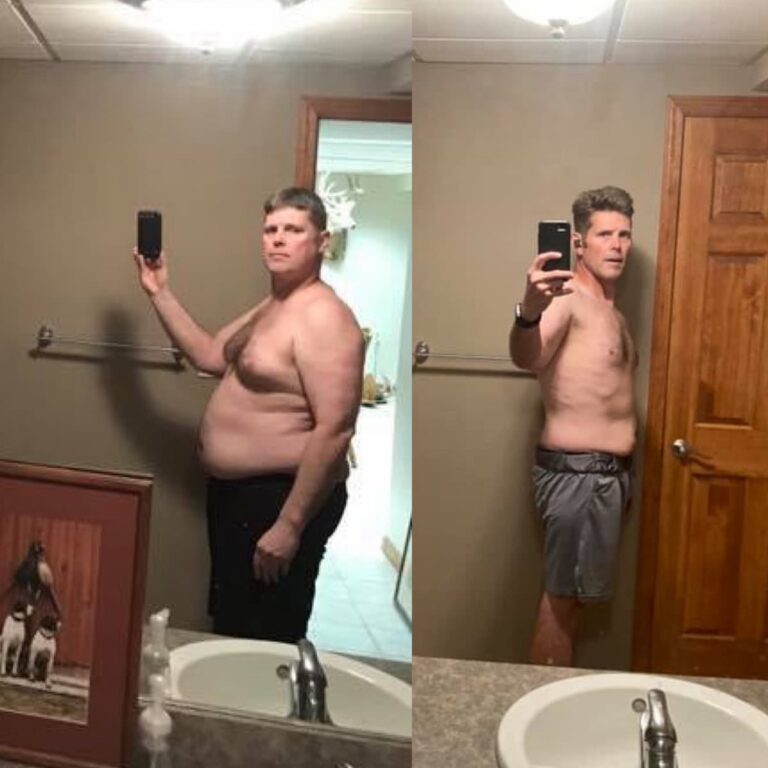


You can see body recomposition changes in as little as 4 weeks. Here’s the exact timeline for what to expect, plus tips to speed up your results.

Body recomposition is different from “weight loss”. It focuses on changes specifically made to muscle mass and body fat. This emphasis can make your clothes fit looser and your body feel stronger. From a longevity perspective, it can also help to protect you from various chronic diseases like Type 2 Diabetes, heart disease, osteoporosis, and sarcopenia.
…But how long does it actually take to see results?
Let’s dive into it.
How Long Does Body Recomposition Take?
You can start seeing significant and noticeable body recomposition progress in as little as 4 weeks. One landmark study had participants follow a body recomposition meal plan and exercise protocol. They lost on average 10 pounds of body fat while gaining over 2 pounds of muscle… in just 4 weeks
Now this was a rather rigorous training routine – 6 days of highly intense and structured exercise – which isn’t realistic for most people to follow. Plus, it was performed on young men who tend to respond better and faster to these type of training protocols.
Taking a look at a more realistic 3 day per week resistance training protocol paired with eating more protein in women, they were able to:
- gain nearly 5 pounds of lean mass (aka muscle)
- lose about 2.5 pounds body fat
- in just 8 weeks
Yet another study in both men and women with 4 days of heavy resistance training combined with eating a high protein diet found that in just 8 weeks they:
- lost nearly 4 pounds of fat
- gained 3.3 pounds of lean mass
- without restricting their intake
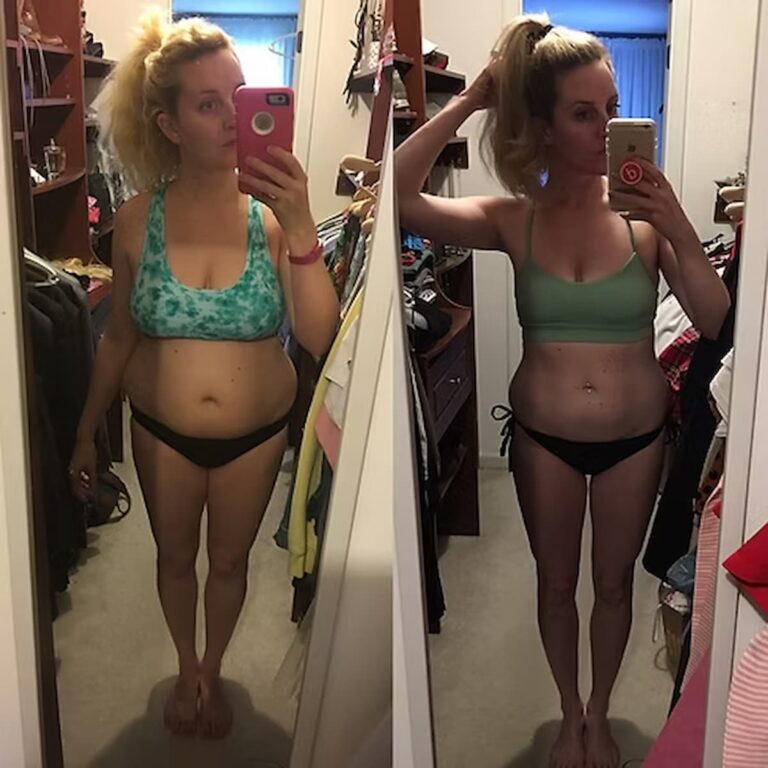
And the research matches up with what I’m seeing in our community with women like Amber, who at 41 years old lost 10 pounds while gaining 2.8 pounds of muscle in 6 weeks.
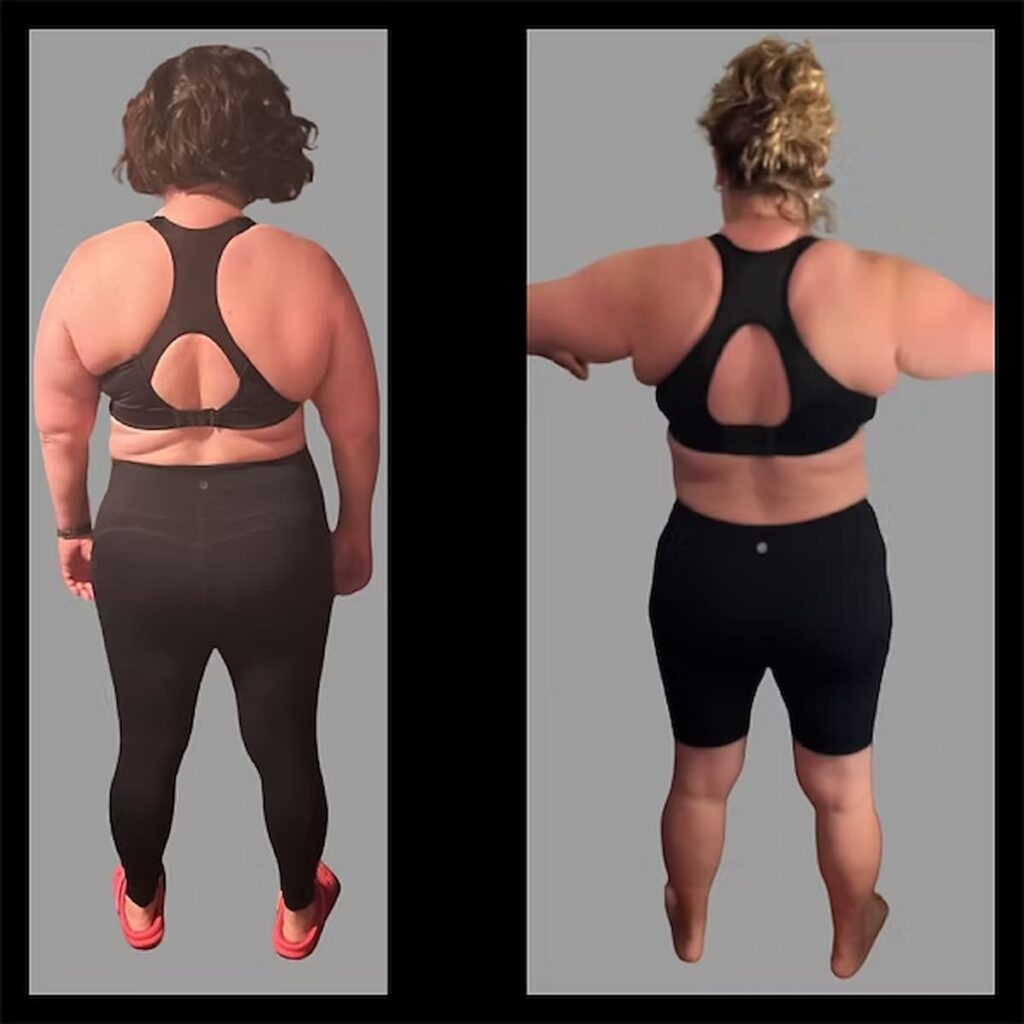
The Body Recomposition Timeline
When looking at research and real data from our community members, here’s the type of progress you can typically see:
Moderate, Sustainable Protocol
This means training 3-4 days per week while eating the right types of foods to support body recomposition:
- Fat loss rate: .5-1 pound per week (2-4 pounds per month)
- Lean mass gain: .25-.5 pounds per week (1-2 pounds/month)
- Timeline for visual results: 6-12 weeks
Using a moderate, sustainable protocol allows you to fuel properly, prevent overtraining, and not tie yourself to a calorie tracker — all while seeing really consistent progress. This is the method we use in our Body Recomposition Program with thousands of community members so that they can focus on burning fat, keeping muscle and not having to count a single calorie.
Intense Protocol
This follows the 6 days of intense training per week while actively tracking and cutting calories by about 40%.
- Fat loss rate: 2-2.5 pounds per week
- Lean mass gain: .65 pounds per week
- Timeline for visual results: 6 weeks
It’s important to remember that this more intense protocol was performed in young men who can tolerate higher workloads/eating much less for short periods without much detriment. Women don’t tend to respond in the same way.
Plus women tend to be more sensitive to severe calorie restriction that can lead to muscle loss, a slower metabolism, and hormones thrown out of balance.
For those reasons, this intense option is not a protocol I recommend for most women, especially those looking for sustainable body recomposition results that last.
How Can You Tell If It’s Working?
A standard scale will not tell you if you’re losing body fat or gaining muscle. It only tells you how much you weigh in total. To track body recomposition results, you need the specific muscle and body fat measurements. Here are the two best ways to track your results:
InBody
This is usually the cheapest and easiest way to track body recomposition. An InBody is a type of scale that can be found at most gyms and some supplement stores or wellness centers. In just 1-2 minutes it measures your lean mass and body fat (plus a ton of other interesting data points).
You can find an InBody near you by just searching on google “InBody near me”. Pretty much every city has one close by you can use.
The Tracking Protocol
- test every 2 weeks
- track muscle mass (in pounds) and body fat (in pounds or percent)
The goal is to see body fat going down (or staying the same), while muscle mass is going up (or staying the same).
DEXA
A DEXA is a type of low radiation x-ray that measures body fat, lean mass, and bone density. This is considered the gold standard and most accurate option, but it’s wildly expensive and not practical. After testing it head-to-head with the InBody, I found that the two results were pretty similar.
But if you want to gather a baseline DEXA, there’s one company that I’ve used in the past and is all over the U.S. You can find them HERE.
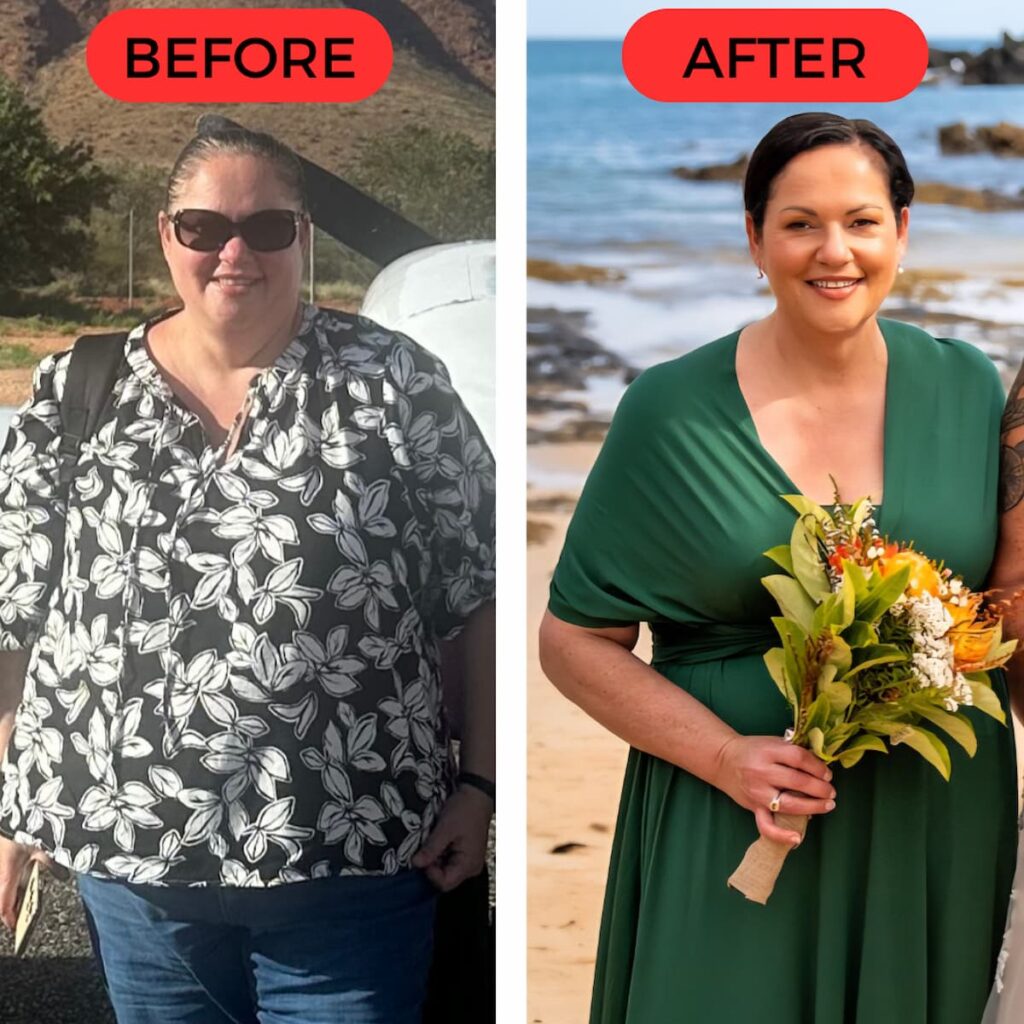
How To Burn Fat & Build Muscle Faster
As we just went over, even with a more moderate, sustainable Body Recomposition protocol you can see pretty incredible changes in less than 2 months. But here are a few tips to help you burn the most body fat without being extreme:
Eat more protein
One thing that every protocol has in common is that the participants ate a lot of protein. This is an absolute requirement for body recomposition. Without protein, you can lose significant muscle.
Most women tend to benefit from eating 1.6 grams of protein per kilogram of body weight. But if you don’t want to do the math, you can checkout my free protein calculator HERE.
Focus on high fiber carbs
These are the types of carbs that don’t spike blood sugar very much. By focusing on these types of carbs, you can fuel your body while preventing hunger, making the fat loss portion of body recomposition a lot easier.
Related: High Fiber Carbs Food List
Eat “ad libitum”
This is a research term that means “eat until satisfied”. Many of the body recomposition studies that show incredible fat loss and muscle maintenance results don’t have the participants reducing calories. They just have them aim for a specific protein goal, then eat until satisfied.
Not only is this a much more enjoyable experience, it’s more sustainable, making you more likely to stick to the change for the long term. You can learn the science-backed tools for how to use this “ad libitum” approach while still seeing amazing progress with my Body Recomposition Program used by thousands of women (like Amber!) around the world.
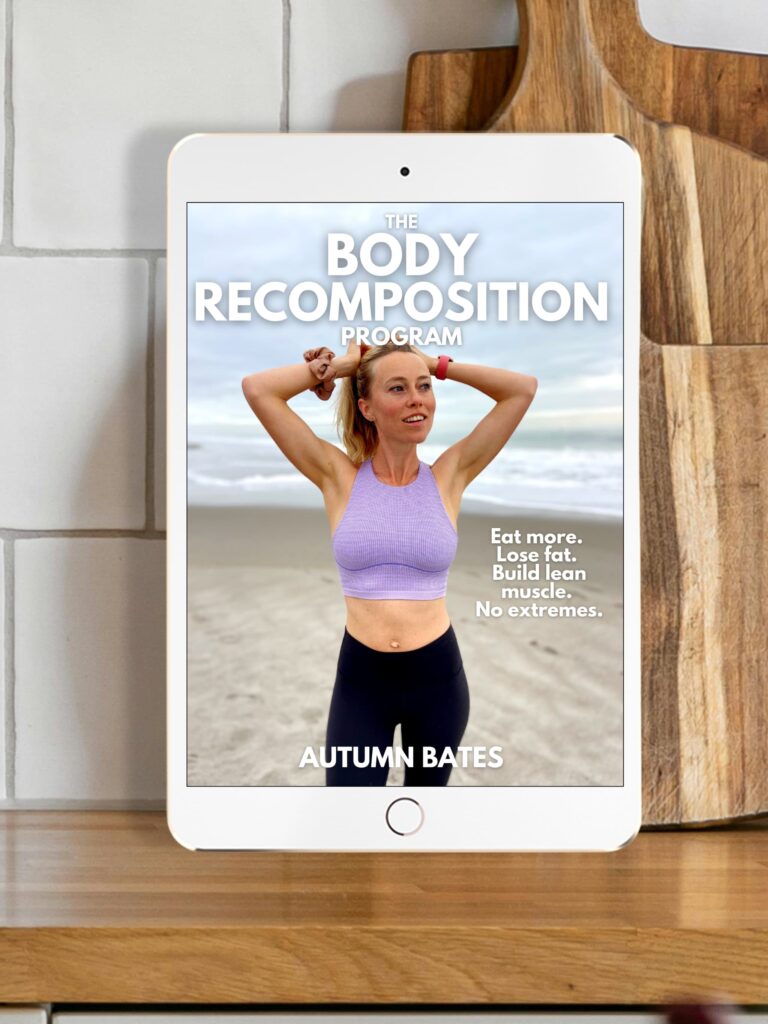
Science-backed + sustainable
The Body Recomposition
Meal Plan
Look leaner and feel your best with 6 weeks of simple, structured meals. Enjoy delicious, real-food recipes designed to support fat loss and muscle retention — without tracking, restriction, or complicated prep.
Don’t skip resistance training
What you eat is one major component to sustainable body recomposition results. The other is resistance training. Both play different roles and both are necessary (not optional). As the earlier studies noted, you can see great results with just 3 days per week of a well structured resistance training program.
Aim for doing one total body resistance training session every other day with an active rest day in between. For example:
- Monday: 1 hour total body resistance training
- Tuesday: Active recovery, long walk
- Wednesday: 1 hour total body resistance training
- Thursday: Active recovery, long walk
- Friday: 1 hour total body resistance training
If you’re brand new to working out, you may want to meet with a trainer for technique guidance. Otherwise, there are great free resources on youtube while you’re first starting your journey.
Final Thoughts
Research consistently shows that body recomposition results are totally do-able, even without crazy rigid schedules or restrictive diets. If you need more of the step-by-step guidance, you can check out our Body Recomposition Program.
Science-backed + sustainable
The Body Recomposition
Meal Plan
Look leaner and feel your best with 6 weeks of simple, structured meals. Enjoy delicious, real-food recipes designed to support fat loss and muscle retention — without tracking, restriction, or complicated prep.